
Why Amazon's Seattle Rapid Grocery Delivery Changes Last-Mile Leverage

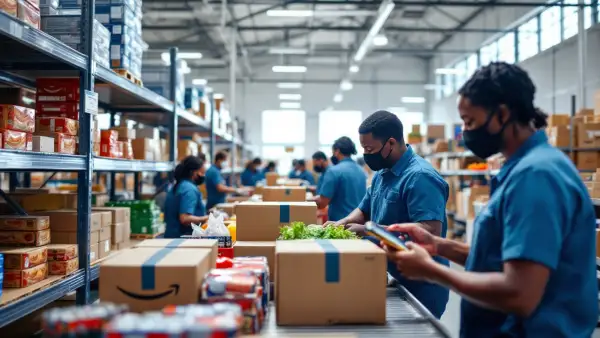
Seattle’s urban congestion wastes excessive time in delivery fleets’ last-mile routes. Amazon just proved its new Amazon Now service can drop groceries in 23 minutes, beating its 30-minute promise.
This ultra-fast delivery rolled out in select Seattle and Philadelphia neighborhoods, offering fresh groceries and household essentials with tracked orders and perks for Prime members.
But this isn’t just about faster delivery—it’s a leverage play on decentralizing inventory and reshaping last-mile constraints in urban logistics.
“Last-mile delivery is a tipping point in supply chains where speed meets systemic friction.”
Debunking the Convenience-Only Narrative
Conventional wisdom brands rapid grocery delivery as a costly convenience upgrade, profitable only for niche users. They see it as expensive gig work plus high delivery fees.
They’re overlooking the strategic repositioning of delivery constraints that unlocks operational leverage. Amazon Now operates out of multiple micro-hubs, not just sprawling warehouses, shifting inventory closer to customers.
This tactical distributed model disrupts last-mile bottlenecks that traditional centralized delivery schemes exacerbate—especially in dense cities like Seattle. It’s a different leverage vector than simply faster couriers or app UX improvements.
System-Level Levers: Micro-Hubs and 2-Minute Driver Handoffs
Amazon’s permit filings reveal fulfillment centers running 24/7 as convenience stores, where workers pick, bag, and stage orders for near-instant driver loading in roughly two minutes.
This eliminates typical last-mile inefficiencies like lengthy packing or driver wait times. Contrast this with competitors relying heavily on large fulfillment centers far from urban cores, causing longer outbound trips and unpredictable delays.
Crucially, the strategic placement of hubs near grocery stores and residential neighborhoods compounds leverage. Orders can be picked within minutes from focused, curated inventory assortments rather than vast product ranges.
This is an infrastructure-as-platform approach that scales automated fulfillment without incremental human drag or vehicle traffic growth.
Compounding Advantages in Consumer Experience and Delivery Economics
Customers get granular visibility: order status, delivery tracking, tipping options—all embedded in the Amazon app. Seeing a vehicle icon inching closer feeds a real-time sense of control that traditional grocery delivery lacks.
The true leverage, however, is economic. Prime members pay a $3.99 fee versus $13.99 for others. This price segmentation nudges frequent customers into a lower cost structure, stabilizing demand and optimizing route efficiency. Competitors sticking to uniform fees miss this dynamic.
In a city like Seattle, where congestion increased last-mile traffic by analyst reports, these efficiencies translate into less centralized congestion and more balanced traffic patterns.
Why Operators Must Watch This Constraint Shift
Amazon Now exemplifies shifting the cost and time constraint from delivery fleets to fulfillment staging. This opens strategic options for rapid urban distribution that others can’t replicate without years of localized permits, infrastructure, and logistics realignment.
Companies in retail, logistics, and last-mile delivery should focus on unlocking constraint repositioning—not just faster delivery vehicles or bigger warehouses. This requires investing in micro-fulfillment hubs, software for two-minute driver handoffs, and pricing models that shape customer behavior.
Seattle and Philadelphia’s urban environments serve as testbeds where Amazon’s
“Leveraging infrastructure placement changes the rules of urban delivery—speed compounds when constraints move upstream.”
Related Tools & Resources
As businesses navigate the complexities of rapid grocery delivery and last-mile logistics, leveraging analytics becomes essential. Centripe provides powerful ecommerce analytics and profit tracking tools that can help retailers optimize their distribution strategies and enhance operational efficiency, making them more competitive in urban markets like Seattle and Philadelphia. Learn more about Centripe →
Full Transparency: Some links in this article are affiliate partnerships. If you find value in the tools we recommend and decide to try them, we may earn a commission at no extra cost to you. We only recommend tools that align with the strategic thinking we share here. Think of it as supporting independent business analysis while discovering leverage in your own operations.
Frequently Asked Questions
What is Amazon Now's grocery delivery promise?
Amazon Now promises grocery deliveries within 30 minutes, but in Seattle it has achieved drop-offs in as fast as 23 minutes, offering ultra-fast service in select neighborhoods.
How does Amazon Now improve last-mile delivery efficiency?
Amazon Now uses multiple micro-hubs near urban areas and achieves two-minute driver handoffs to reduce packing and wait times, contrasting traditional centralized warehouses and reducing last-mile bottlenecks.
What cities currently have Amazon Now rapid delivery service?
The rapid grocery delivery service is currently rolled out in select neighborhoods in Seattle and Philadelphia, targeting urban centers with high congestion.
How does Amazon Now pricing work for Prime members and others?
Prime members pay a $3.99 delivery fee while non-Prime customers pay $13.99, encouraging frequent users to stabilize demand and optimize route efficiency.
What strategic advantages does Amazon Now offer beyond speed?
Besides faster delivery, Amazon Now shifts last-mile constraints upstream through decentralized micro-hubs and efficient inventory staging, improving urban logistics and reducing congestion.
How does Amazon Now's infrastructure differ from traditional grocery delivery?
Amazon Now operates fulfillment centers 24/7 like convenience stores near customers, allowing quick order picking and driver loading, unlike large warehouses far from urban cores causing delays.
What impact does Amazon Now have on traffic congestion?
By decentralizing inventory and enabling faster last-mile delivery, Amazon Now helps reduce last-mile traffic congestion in cities like Seattle, balancing traffic patterns amid increasing urban congestion.
Why should other operators watch Amazon Now’s model?
Amazon Now exemplifies strategic constraint repositioning by investing in micro-fulfillment hubs and rapid driver handoffs, offering a replicable urban distribution advantage that competitors currently lack.