
Why Arm’s CEO Sees Robots Replacing Factory Workers Soon

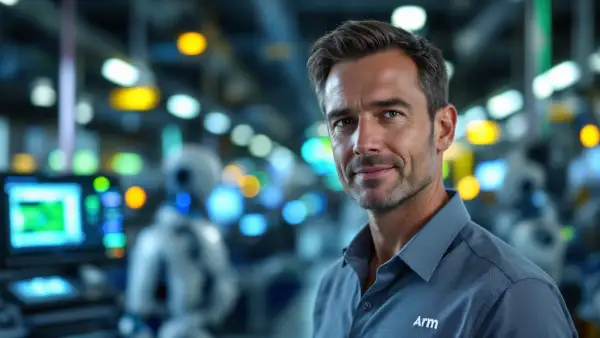
Traditional factory automation traps manufacturers in rigid, single-task systems. Arm CEO Rene Haas projects that within 5 to 10 years, general-purpose AI-powered humanoid robots will replace large sections of factory labor. This shift isn’t just about automation—it's about using flexible “physical AI” to dismantle the constraint of task specificity in manufacturing.
Haas’s forecast spotlights how reprogrammable humanoid robots leverage adaptability to replace costly, fixed-function robots. Unlike robotic arms optimized for one task with dedicated hardware and software, these physical AI systems use AI-driven learning to switch tasks on-the-fly, slashing downtime and setup costs.
“Physical AI will be a great enabler,” Haas said, signaling a structural transformation in global manufacturing leverage. Arm’s role as a chip architecture licensor to giants like Apple and Qualcomm puts it at the center of this shift—especially as semiconductor supply chains remain fragile and concentrated around few players like TSMC and ASML.
“Flexible robots break the one-task trap, unlocking factory productivity at scale.”
Why Conventional Robotics Misreads Automation Leverage
Industry narratives frame factory automation as cost-reduction via fixed automation setups. Analysts often measure returns by robot density or cycle-speed improvements in isolated tasks.
That misses the real leverage: constraint repositioning. Arm’s insight is that the hard limit in automation isn’t mechanical speed, but the massive retooling time and capital tied to single-task hardware.
This constraint leaves companies chained to fixed lines, reducing their ability to pivot product lines or scale variable orders—a leverage trap exposed in recent supply shocks. See how Ukraine’s drone surge accelerated military production by shifting system constraints under pressure.
Physical AI Robots: The System That Replaces Single-Use Machines
Traditional factory robots are like highly specialized contractors, each engineered for one duty: stacking, welding, packaging. Changing the task means costly reprogramming and hardware swaps.
Contrast that with humanoid robots powered by machine learning and dynamic AI control. These robots can flexibly perform multiple jobs with simple software updates. This drops acquisition cost from costly bespoke robots to infrastructure costs that scale across many tasks.
Unlike competitors locked into incremental hardware improvements, this leap lowers the constraint of hardware-task specificity. It enables factories to optimize labor deployment dynamically with minimal human oversight.
This pivot echoes what OpenAI achieved scaling AI chatbots: moving from narrowly scripted commands to adaptive, learning systems capable of broad tasks. For more on scaling AI’s operational leverage, see how OpenAI scaled ChatGPT.
What Semiconductor Supply Chain Risks Reveal About Robot Adoption
Arm’s chip designs power devices from smartphones to servers, but Haas warns the semiconductor supply chain is vulnerable. Production depends heavily on companies like TSMC and ASML—single points of failure exposed by COVID-19 shortages.
This concentration risk constrains robot hardware availability and thus the pace of automation rollout. Factories adopting physical AI systems must navigate these fragilities, signaling strategic value in supply diversification and local semiconductor investments.
Firms that address these constraints early will lock in durable advantages, much like Microsoft and Google did building proprietary cloud infrastructure. For parallels on structural leverage in tech labor markets, see why AI forces worker evolution.
Why Manufacturers and Policymakers Must Rethink Factory Leverage Now
The rising flexibility of physical AI robots changes the fundamental constraint in manufacturing from hardware specialization to software adaptability and supply chain resilience.
Operators who recognize this shift can redesign factories for agility, scaling multiple product lines without exponential capital cost increases. Policymakers should anticipate labour market disruption and invest in skilled workforce transitions while incentivizing semiconductor supply diversification.
Countries that master these levers will lead the next wave of manufacturing competitiveness. Rene Haas’sautomation without reinvention of systems is obsolete.
Related Tools & Resources
For manufacturers looking to embrace the flexibility and automation discussed in this article, MrPeasy provides a robust cloud-based ERP solution tailored for small manufacturers. By streamlining production planning and inventory control, MrPeasy helps businesses adapt to the dynamic demands of modern manufacturing, just as the physical AI robots aim to enhance operational efficiency. Learn more about MrPeasy →
Full Transparency: Some links in this article are affiliate partnerships. If you find value in the tools we recommend and decide to try them, we may earn a commission at no extra cost to you. We only recommend tools that align with the strategic thinking we share here. Think of it as supporting independent business analysis while discovering leverage in your own operations.
Frequently Asked Questions
Who is Rene Haas and what is his prediction about factory robots?
Rene Haas is the CEO of Arm, and he projects that within 5 to 10 years, general-purpose AI-powered humanoid robots will replace large sections of factory labor, transforming manufacturing flexibility and productivity.
What is "physical AI" in the context of factory automation?
Physical AI refers to flexible, AI-driven humanoid robots capable of performing multiple manufacturing tasks dynamically, unlike traditional fixed-function robots designed for a single task.
How do physical AI robots differ from conventional factory robots?
Conventional robots are specialized for one task with dedicated hardware and software, requiring costly reprogramming for new tasks. Physical AI robots use machine learning to adapt on-the-fly, reducing downtime and setup costs.
What role does Arm play in the shift towards AI-powered humanoid robots?
Arm designs chip architectures used by companies like Apple and Qualcomm, positioning it centrally in the move towards physical AI robots, despite semiconductor supply chain vulnerabilities involving players like TSMC and ASML.
Why is the semiconductor supply chain a concern for robot adoption?
The semiconductor supply chain is highly concentrated, with companies like TSMC and ASML as single points of failure. This limits hardware availability and slows automation rollout in manufacturing.
How will factories benefit from adopting physical AI robots?
Factories adopting physical AI robots can maximize labor efficiency by flexibly switching tasks with minimal reprogramming, enabling agility in scaling multiple product lines without large capital increases.
What should policymakers do in response to the rise of physical AI robots?
Policymakers should anticipate labor market disruption by investing in workforce skill transitions and incentivizing semiconductor supply diversification to support resilient automation ecosystems.
What are the key constraints in conventional automation that physical AI robots overcome?
Traditional automation’s main constraint is task-specific hardware requiring extensive retooling. Physical AI robots overcome this by enabling software adaptability, drastically reducing retooling time and capital investment.