
Why Canadian Oil’s Price Drop Reveals Global Supply Leverage

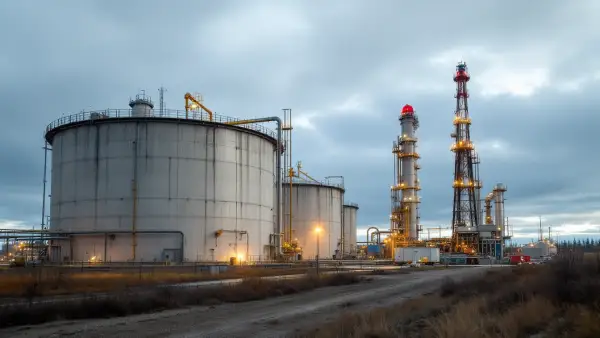
Canadian crude prices have slumped to their lowest against the U.S. benchmark since March. Alberta's surging oil production is colliding with a global market already burdened by oversupply. This is not just a price drop—it's a structural shift in how supply constraints reshape value. When production outpaces demand globally, regional supply surpluses magnify price pressure.
Challenging the Supply-Demand Trade-Off View
Conventional wisdom treats oil pricing as a simple balance between supply and demand. Yet, this view misses the systemic nuance: where and how supply growth aligns with global constraints defines leverage. Canada's rising output shows that beating production quotas does not guarantee pricing power.
Unlike producers who control pipeline access or export routes, Canada’s lack of infrastructure bottlenecks means it must compete directly in the global oversupplied market. This flips the usual supply leverage model on its head, exposing commodity producers to worldwide price effects rather than local scarcity premiums. See how this contrasts with U.S. equities’ ability to disregard rate cut fears through different systemic constraints.
Export Capacity as the Hidden Constraint
Alberta’s pipeline capacity limits are easing, allowing more crude to flood the market. This removes an artificial regional price floor but amplifies exposure to global gluts. Meanwhile, alternative producers like Saudi Arabia maintain production discipline, preserving price leverage through output controls.
Unlike shale players in the U.S. who leverage rapid scaling and flexible logistics, Canadian producers face less operational agility to pivot output quickly. This limits their strategic response and accentuates global oversupply pressure. The mechanism: infrastructure and logistics constraints act as either amplifiers or dampeners of pricing power. Learn more about constraints shaping industry moves from our analysis on profit lock-in constraints in tech markets.
The Global Oversupply Feedback Loop
The worldwide excess of crude has created a feedback system where any regional increase in production depresses prices globally. Canadian crude’s decline exemplifies how interconnected constraints ripple across markets—producers who once leveraged scarcity now contend with synchronized oversupply, weakening traditional pricing power.
For operators, the lesson is clear: scaling output without controlling distribution channels or demand constraints erodes revenue leverage. This is a classic trap in commodity markets magnified by globalization and infrastructure dynamics.
What This Means Going Forward
Canadian producers and investors must now shift from volume growth to supply chain positioning. Securing export infrastructure or investing in differentiated crude processing could restore leverage. Countries with export chokepoints like Russia or Nigeria retain more pricing influence despite modest production.
This dynamic also signals a caution for global commodity players: macro-market leverage often hinges on non-obvious bottlenecks like logistics and policy. As global markets saturate, controlling distribution flows becomes the strategic pivot to defend margins.
Pricing power now rides on controlling constraints, not just increasing output.
Related Tools & Resources
For Canadian producers grappling with infrastructure constraints and seeking to enhance their operational agility, MrPeasy offers a cloud-based ERP tailored for small manufacturers. By improving inventory control and production planning, MrPeasy can help businesses align their output with market demands more effectively. Learn more about MrPeasy →
Full Transparency: Some links in this article are affiliate partnerships. If you find value in the tools we recommend and decide to try them, we may earn a commission at no extra cost to you. We only recommend tools that align with the strategic thinking we share here. Think of it as supporting independent business analysis while discovering leverage in your own operations.
Frequently Asked Questions
Why have Canadian crude oil prices dropped recently?
Canadian crude prices have dropped to their lowest point against the U.S. benchmark since March due to Alberta's surging oil production colliding with a global market burdened by oversupply. This excess production outpaces demand, putting significant downward pressure on prices.
How does Alberta's pipeline capacity affect oil prices?
Alberta’s pipeline capacity limits are easing, which allows more crude oil to flood the market. This removes regional price floors but increases exposure to global oversupply, amplifying downward price pressure on Canadian crude.
What role do global supply constraints play in oil pricing?
Global supply constraints such as export capacity and infrastructure bottlenecks determine leverage in oil pricing. Countries with chokepoints like Russia or Nigeria can maintain greater pricing power despite smaller production levels, while Canada’s lack of such bottlenecks means it competes directly in an oversupplied global market.
How does Canada’s oil production compare to U.S. shale producers in terms of flexibility?
Canadian producers face less operational agility to quickly pivot output compared to U.S. shale producers, who benefit from rapid scaling and flexible logistics. This operational rigidity limits Canada’s strategic response to shifting demand or price changes.
Why does increasing oil output not always result in better pricing power?
Scaling output without controlling distribution channels or demand constraints can erode pricing power. The global oversupply feedback loop means increased production depresses prices worldwide, especially when infrastructure or logistics do not limit supply flow.
What strategic shifts should Canadian producers consider going forward?
Canadian producers should shift focus from volume growth to securing export infrastructure or investing in differentiated crude processing to regain pricing leverage. Controlling supply chains and distribution is now critical to defending margins in global commodity markets.
How does global oversupply affect regional oil markets?
Global oversupply creates feedback loops where any regional increase in production results in global price depressions. Canadian crude price declines exemplify how interconnected markets amplify supply shocks beyond local constraints.
What is the 'hidden constraint' limiting Canadian oil's pricing power?
The hidden constraint is export capacity and pipeline infrastructure. While Alberta’s bottlenecks are easing, the lack of controlled export chokepoints reduces Canada’s ability to maintain pricing power, exposing producers to global market oversupply impacts.