
Why Guangdong’s Push for Huawei Chips Reveals China’s Tech Leverage Shift

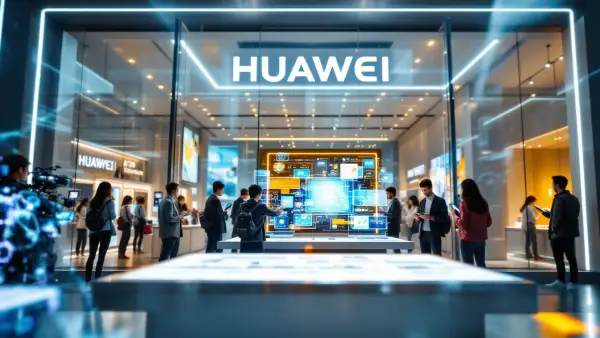
Guangdong, China’s wealthiest province with a GDP larger than South Korea’s, is doubling down on homegrown innovation by spotlighting Huawei Technologies’ AI chips and HarmonyOS as pillars of China’s tech self-sufficiency. This move from Guangdong, which includes the Shenzhen tech hub, comes amid pressure on local governments to align with Beijing’s strategic goals in technology. But this isn’t just a provincial brag; it’s about harnessing system-level leverage in a high-stakes geopolitical race. “Control over core tech platforms is the new measure of industrial power,” and Guangdong is orchestrating that control.
Why Conventional Views Miss the Real Constraint
Many see China’s chip and OS push as a cost or capabilities race against global giants like Nvidia or Microsoft. They focus on specs or dollars spent developing chips and software. That misses the fundamental leverage play: Guangdong isn’t just competing on product features but prioritizing ecosystem and supply chain control to evade external chokepoints. This is a classic case of constraint repositioning, not mere capacity building—a framework we analyzed around 2024 tech layoffs exposing structural leverage failures.
Think in Leverage showed how companies that overlook constraints trap themselves in costly cycles. Guangdong's strategy avoids this by vertically integrating AI chip design with HarmonyOS development to create an independent stack.
How Guangdong’s Dual Focus Creates Unmatched Compounding Advantage
Huawei’s AI chips represent core hardware capability. Unlike Chinese competitors who rely on external chipmakers from Taiwan or the U.S., Guangdong leverages domestic production that sidesteps import restrictions. HarmonyOS then runs natively on this hardware, eliminating the complexity and performance drag of foreign OS layers like Android. This integration transforms Guangdong’s tech base into a self-reinforcing engine.
For comparison, South Korea dominates semiconductor manufacturing but depends heavily on U.S. software ecosystems like Windows or Android. This dependency means geopolitical tensions can still throttle growth. Guangdong’s vertical system design cuts that risk, converting what was previously a throughput constraint into a durable advantage—a pivot unseen by many.
Further, the AI chips fuel local innovation in Shenzhen’s vast maker ecosystem, automating processes and accelerating product cycles. This system runs with far less human intervention, aligning with autonomous leverage trends like those seen in OpenAI’s ChatGPT scale via infrastructure automation.
What This Means for Global and Regional Tech Power Balance
China’s focus under Guangdong on developing homegrown chips integrated with its OS solves a key strategic constraint: foreign dependence. This unlocks new strategic moves for local firms, enabling cheaper, faster launches in sectors from telecom to AI-powered logistics. It also signals pressure on competitors like Nvidia to innovate beyond hardware and secure software ecosystem footholds.
Other regions with strong manufacturing but weaker software sovereignty—like Southeast Asia or India—can replicate this model selectively, but few have Guangdong’s scale and capital. The shift underscores the value of controlling the entire chain from silicon to user interface as a leverage mechanism.
“In tech, controlling the underpinning system shapes the entire value chain’s future.” Operators learning from Guangdong’s move will prioritize system integration over incremental product upgrades—because that’s how you turn a regional tech push into a geopolitical force.
For deeper context on structural leverage failures and how regional strategies can unlock compounding advantage, see our analysis on 2024 tech layoffs and OpenAI’s scaling.
Related Tools & Resources
As Guangdong pushes for technological sovereignty with homegrown AI chips, leveraging tools like Blackbox AI could prove vital for developers looking to innovate. By utilizing AI to enhance coding efficiency and streamline development processes, you can directly engage in the ecosystem integration that is becoming critical in today's tech landscape. Learn more about Blackbox AI →
Full Transparency: Some links in this article are affiliate partnerships. If you find value in the tools we recommend and decide to try them, we may earn a commission at no extra cost to you. We only recommend tools that align with the strategic thinking we share here. Think of it as supporting independent business analysis while discovering leverage in your own operations.
Frequently Asked Questions
Why is Guangdong focusing on Huawei’s AI chips and HarmonyOS?
Guangdong prioritizes Huawei’s AI chips and HarmonyOS to achieve tech self-sufficiency and reduce foreign dependency, creating an independent tech stack that integrates hardware and software vertically.
How does Guangdong’s tech strategy differ from other regions like South Korea?
Unlike South Korea, which depends on U.S. software ecosystems like Windows and Android, Guangdong integrates domestic AI chips with its own HarmonyOS, reducing geopolitical risks and enhancing control over the entire system.
What is "constraint repositioning" in the context of China's chip strategy?
Constraint repositioning means Guangdong focuses on controlling the ecosystem and supply chain, not just product specs or cost, to avoid external chokepoints and create durable leverage in the tech industry.
How does Guangdong’s vertical integration benefit its tech ecosystem?
By vertically integrating AI chip design with HarmonyOS, Guangdong eliminates performance drags from foreign OS layers and boosts innovation in Shenzhen’s maker ecosystem, accelerating product cycles.
What impact does Guangdong's chip push have on global tech competitors like Nvidia?
Guangdong’s homegrown tech stack pressures competitors such as Nvidia to innovate beyond hardware and secure software ecosystem footholds amid rising geopolitical tech competition.
Can other regions replicate Guangdong’s tech leverage model?
Regions like Southeast Asia or India can selectively replicate the model but often lack Guangdong’s scale and capital needed to control the entire chain from silicon to user interface.
What role does automation play in Guangdong’s chip and software development?
Automation in Guangdong’s AI chip and HarmonyOS integration reduces human intervention, aligns with autonomous leverage trends, and supports rapid, cost-effective innovation similar to OpenAI’s ChatGPT scale.
How does Guangdong’s tech strategy align with Beijing’s broader goals?
Guangdong’s strategy aligns with Beijing’s tech self-sufficiency goals by promoting homegrown innovation, reducing foreign tech reliance, and asserting China’s industrial power via system-level control.