
Why IndiGo’s Mass Cancellations Reveal Hidden System Fragility

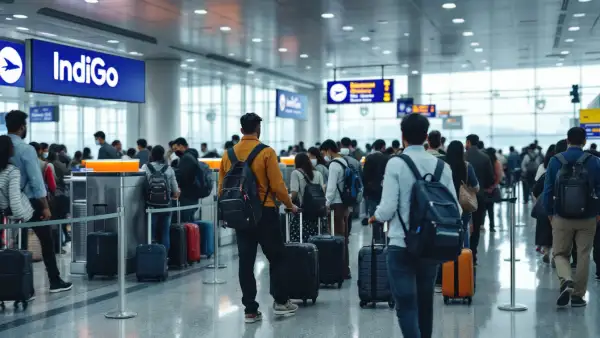
India’s airport chaos is far from a normal operational hiccup. Over three days, IndiGo canceled hundreds of flights, stranding thousands and throwing airports into disarray. While widely reported as a staffing or weather issue, this disruption exposes a deeper systemic constraint in Indian aviation infrastructure and airline operational leverage. True resilience emerges not from scale alone—but from systems designed to absorb shocks without cascading failures.
Why Conventional Wisdom Misses The Point
Industry observers often attribute aviation disruptions to predictable factors like weather or labor strikes. That view assumes airports and carriers operate as loosely coupled systems where failures are local. They're wrong—the ongoing IndiGo cancellations reveal rigid interdependencies and centralized constraints. Unlike US or European carriers that use flexible aircraft scheduling and crew pools, IndiGo’s system lacks the modularity necessary to re-route resources dynamically.
This is an operational constraint repositioning scenario, not a temporary shock. The firm’s approach to scale depends heavily on fixed crew assignments and high aircraft utilization rates, leaving almost no buffer. See how airlines like Delta and Lufthansa hide leverage in flexible rostering rather than brute force staffing, a lesson explored in Why Dynamic Work Charts Actually Unlock Faster Org Growth.
The Real Mechanism Behind IndiGo’s Collapse
IndiGo operates with aggressive turnaround targets and single-hub heavy scheduling to maximize asset utilization. This lowers costs but exacerbates cascading failures when one flight is delayed or crews are unavailable. The cancellation snowball is not random—it’s the result of operating at peak constraint with near-zero slack.
In contrast, competitors like SpiceJet and AirAsia India maintain more flexible fleet deployment allowing localized recovery. They sacrifice some utilization leverage but enhance systemic resilience. This tradeoff between utilization and operational flexibility is the hidden lever driving Indian air travel’s fragility, a dynamic highlighted in Why USPS’s January 2026 Price Hike Actually Signals Operational Shift.
What Airports’ Systems Reveal About Indian Aviation
The impact spreads beyond IndiGo. Airports are overwhelmed due to inadequate real-time coordination and legacy infrastructure that supports neither rapid rescheduling nor passenger re-accommodation automation. The Indian system contrasts sharply with hubs like Singapore Changi, where advanced digital scheduling platforms proactively adjust airport and airline workflows to disruptions.
This integration failure between airlines and airports creates a feedback loop escalating delays and cancellations. Airlines are forced into manual coordination, increasing human error and response time. Contrast this with how OpenAI’s scalable infrastructure avoids manual bottlenecks, a leverage lesson found in How OpenAI Actually Scaled ChatGPT to 1 Billion Users.
What This Means For Indian Aviation’s Future
The core constraint Indian aviation must solve is systemic inflexibility— not just staffing or planes. Future strategic moves should target end-to-end scheduling automation and modular crew resource pools. Investors and operators need to view IndiGo’s crisis as a leverage failure demanding large investments in software-enabled orchestration over incremental capacity expansion.
This shift will unlock sustained growth by absorbing shocks rather than amplifying them. Other emerging markets with similar infrastructure gaps should monitor this closely. “Infrastructure rigidity fuels cascading failures; flexibility unlocks exponential resilience.”
Related Tools & Resources
In light of the operational challenges highlighted in the article, tools like Copla can facilitate the creation and management of standard operating procedures, enabling organizations to streamline their processes and enhance flexibility. By leveraging such platforms, airlines and airports can work towards reducing systemic inflexibility and improving overall operational resilience. Learn more about Copla →
Full Transparency: Some links in this article are affiliate partnerships. If you find value in the tools we recommend and decide to try them, we may earn a commission at no extra cost to you. We only recommend tools that align with the strategic thinking we share here. Think of it as supporting independent business analysis while discovering leverage in your own operations.
Frequently Asked Questions
Why did IndiGo cancel hundreds of flights over three days?
IndiGo's mass cancellations stem from systemic inflexibility in their operational model, including fixed crew assignments and aggressive turnaround targets, which leave no buffer to absorb shocks like crew unavailability or delays.
What systemic issues contribute to Indian aviation's fragility?
Indian aviation suffers from legacy infrastructure, inadequate real-time coordination, and centralized rigid scheduling that hinder rapid rescheduling and passenger re-accommodation, exacerbating cascading failures across airports and airlines like IndiGo.
How does IndiGo’s operational approach differ from US and European carriers?
Unlike IndiGo, US and European carriers such as Delta and Lufthansa use flexible aircraft scheduling and crew pools to dynamically re-route resources, enhancing resilience. IndiGo relies on fixed crew assignments and maximizes aircraft utilization with near-zero slack, increasing vulnerability.
What impact do IndiGo’s cancellations have on Indian airports?
IndiGo’s cancellations overwhelm Indian airports, which lack advanced digital scheduling platforms and automation for passenger handling. This causes a feedback loop of delays and manual coordination errors, unlike hubs such as Singapore Changi that use proactive digital systems.
How can Indian aviation improve its resilience against disruptions?
Resilience can be improved by investing in end-to-end scheduling automation, creating modular crew resource pools, and adopting modern infrastructure to enable dynamic recovery, moving beyond incremental capacity expansion toward system flexibility.
What lessons can Indian airlines learn from other carriers?
Indian airlines can learn from Delta and Lufthansa’s flexible rostering and fleet deployment strategies, which prioritize operational flexibility over maximal utilization, allowing them to better absorb shocks and prevent cascading failures.
What role can technology tools like Copla play in aviation operations?
Tools like Copla facilitate creation and management of standard operating procedures to streamline processes and improve flexibility. Leveraging such software can help airlines and airports reduce systemic inflexibility and enhance operational resilience during disruptions.
Why is IndiGo’s crisis referred to as a leverage failure?
IndiGo’s crisis is a leverage failure because it exposes how scaling through rigid, maximum-utilization operations without systemic flexibility amplifies disruptions, showing the need for software-enabled orchestration to absorb shocks effectively.