
Why Kroger’s Sales Cut Reveals Shoppers’ Tight Leverage Shift

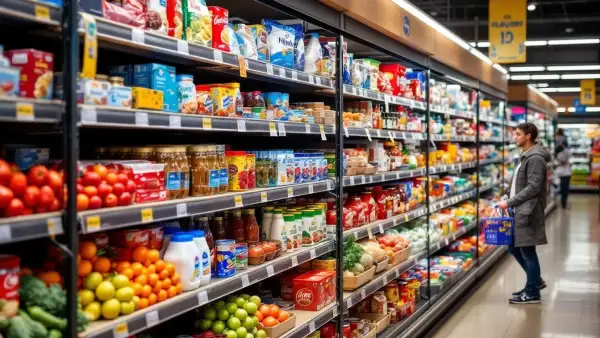
Kroger recently trimmed its annual sales forecast as shoppers tighten spending in a landscape where grocery inflation persists. This adjustment came amid growing evidence that American consumers are becoming intensely price-conscious, navigating tighter budgets and seeking strategic value. But this isn’t just about consumers spending less—it reflects a fundamental shift in how leverage flows through retail systems under inflationary pressure.
The real story lies in how shopper behavior composes an emerging constraint on Kroger’s scale advantage, forcing a rethinking of operational and pricing levers at play. Buyers controlling leverage means retailers face a compound headwind beyond simple cost pressures.
Why conventional thinking misses leverage traps in retail pricing
The default analysis lumps Kroger’s sales cut under broad inflation-era tightening. Analysts often treat it as a straightforward cost-cutting signal. They miss how constraint repositioning happens when price-sensitive shoppers limit volume, undermining Kroger’s usual scale economies.
This dynamic is not unique. Internal patterns echo what we revealed in Why USPS’s January 2026 Price Hike Actually Signals Operational Shift, where cost raises exposed fragile demand curves—tightening limits on volume leverage across an entire system.
For retailers, this means strategic cost management no longer just curbs inputs; it must anticipate shoppers’ shifting budgets as a moving bottleneck.
Two competing retail models breaking under demand constraint
Walmart has held ground partly by deploying aggressive automation and supply chain scale, as explored in How Walmart Quietly Handed Leadership To Unlock Next Growth Phase. Its model relies on volume leverage via razor-thin margins.
Kroger’s trimmed forecast reveals limits to that volume foundation as consumers shift to value platforms or buy less per trip. Unlike competitors running loyalty or membership clubs that extract recurring revenue, Kroger faces a direct bottleneck: spending constraint throttles sales leverage at a fundamental level.
Amazon offers a contrast: its ecosystem approach creates multi-layer leverage—subscription, delivery, and data-driven promos—that soften consumer sensitivity. Kroger’s model lacks this integrated leverage, exposing execution friction as shoppers switch to alternatives.
Redefining the constraint: budget-conscious shoppers as a system bottleneck
Kroger’s situation spotlights a shifting constraint from supply chain or operations to the consumer wallet. This consumer-driven bottleneck changes how Kroger can deploy capital and technology for leverage.
Traditional retail assumes sales grow with added inventory or marketing spend. But when consumer budgets tighten, returns diminish sharply, turning volume acquisition into a low-leverage play. Kroger’s trimmed outlook signals this transition, forcing a pivot toward fresh strategic levers like dynamic pricing and hyper-local assortment optimization.
This reframing echoes insights from Why Salespeople Actually Underuse Linkedin Profiles For Closing Deals, emphasizing precision tools over blunt volume tactics in constrained systems.
Who benefits and what’s next after Kroger’s leverage shift
Retailers need to move fast to a new leverage frontier: shifting from volume-driven growth to building constraint-aware, automated systems that boost per-buyer value. Kroger’s strategy reset is a canary in the coal mine for U.S. grocers.
Operators who integrate AI-powered pricing, capture first-party data, and leverage supply chain automation will erect barriers Kroger currently struggles with. Other chains ignoring this constraint risk compounding margin erosion.
International markets facing inflation will watch closely. The U.S. grocery shift offers a framework for understanding consumer leverage constraints globally, redefining growth models from traditional discounting to system-driven precision.
“In tight-budget economies, control over consumer spending patterns becomes the highest form of leverage.”
Related Tools & Resources
For retailers like Kroger, adapting to shifting consumer budgets is crucial, and utilizing analytics tools like Centripe can provide the insights needed to track profits and optimize sales strategies effectively. Understanding where you stand financially allows for smarter decision-making amidst these evolving consumer dynamics. Learn more about Centripe →
Full Transparency: Some links in this article are affiliate partnerships. If you find value in the tools we recommend and decide to try them, we may earn a commission at no extra cost to you. We only recommend tools that align with the strategic thinking we share here. Think of it as supporting independent business analysis while discovering leverage in your own operations.
Frequently Asked Questions
Why did Kroger trim its annual sales forecast in 2025?
Kroger trimmed its sales forecast due to persistent grocery inflation and consumers tightening their budgets, becoming more price-conscious and limiting volume purchases.
How does shopper behavior affect Kroger's sales leverage?
Shoppers' shift to value platforms and buying less per trip constrains Kroger's volume leverage, which traditionally underpinned its scale advantages and pricing strategies.
What are the differences between Kroger’s and Walmart’s retail models amid demand constraints?
Walmart maintains ground by using automation and supply chain scale with razor-thin margins, while Kroger faces limits on volume growth as spending constraints throttle sales leverage fundamentally.
How is Amazon’s retail model different from Kroger’s in handling consumer spending?
Amazon employs a multi-layer leverage model integrating subscriptions, delivery, and data-driven promotions, which softens consumer price sensitivity unlike Kroger’s less integrated system.
What strategic shifts must Kroger consider due to this leverage change?
Kroger needs to pivot from volume-driven growth to dynamic pricing, hyper-local assortment optimization, and leveraging AI-powered pricing along with first-party data to improve per-buyer value.
What risks do retailers face if they ignore shifting consumer budget constraints?
Retailers ignoring consumer spending constraints may suffer compounded margin erosion and lose competitiveness by failing to adopt automated, constraint-aware systems.
How does Kroger’s situation reflect global inflationary impacts on grocery retailers?
The shift Kroger experiences serves as a framework for other markets dealing with inflation, highlighting the need to move from traditional discount models to precision, system-driven growth strategies.
What tools can help retailers like Kroger adapt to these changes?
Analytics tools like Centripe provide insights on profits and sales optimization, aiding retailers in smarter decision-making amid tight consumer budgets and inflationary pressures.