
Why Lula Asked Trump for Help Signals Brazil’s Crime-Fighting Shift

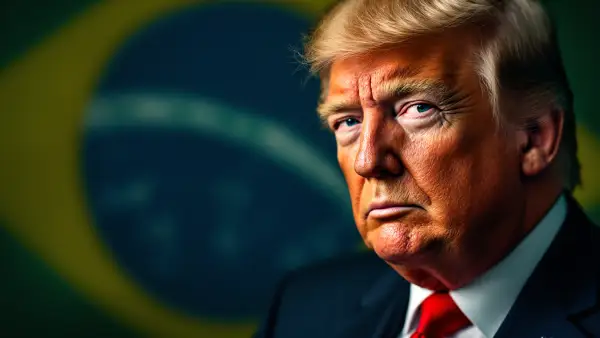
Brazil faces an estimated $20 billion annual loss from tax evasion, far exceeding average losses in comparable emerging markets. President Luiz Inacio Lula da Silva publicly requested Donald Trump to arrest a Florida-based individual suspected as Brazil’s largest tax evader. This move reveals more than diplomatic cooperation—it highlights a new strategy to weaponize cross-border leverage against organized crime. Fighting global crime requires control beyond borders, not just domestic law enforcement.
Challenging the Myth of Local Solutions to Crime
Conventional wisdom treats organized crime as a purely local problem solvable by national police and judiciary reforms. However, Brazil’s reliance on the US justice system exposes that constraint repositioning—the ability to extend enforcement leverage internationally—is the real battleground. This echoes how DOJ guilty pleas reveal North Korea’s vulnerabilities in remote IT leverage.
Brazil is not alone; countries like Nigeria and Mexico also struggle to arrest key fugitives sheltered abroad, showing that crime control depends on transnational leverage systems beyond local police capacity. Senegal’s debt system fragility similarly shows that real power lies in controlling external nodes.
Why Arresting a Florida Resident Matters More Than It Seems
Brazil’s biggest tax evader residing in the US is not about one person—it’s a choke point in Brazil’s crime-finance system. Arresting him disables a critical node in a network that siphons billions annually. Unlike other countries spending years on fragmented investigations, Brazil’s request to the US government directly targets constraint removal by leveraging US legal reach.
This is a sharp contrast to countries that rely solely on domestic courts, which are slower and less capable of pursuing offshore assets. WhatsApp’s chat integration shows the power of unlocking external systems to compound operational advantage—Brazil’s move aims for a similar cross-border leverage.
Cross-Border Enforcement as a New Strategic Lever
The shift Brazil signals is transforming the fight against organized crime into an international leverage game, where access to foreign legal systems becomes the critical constraint. It forces countries to build diplomatic and digital infrastructure that reaches beyond domestic borders.
Countries with tax evasion and organized crime problems must now invest in transnational partnerships, legal automation, and intelligence sharing platforms to avoid becoming havens. The constraint has moved from internal enforcement efficiency to external jurisdictional reach.
Who Wins and Who Must Adapt Next
Emerging economies that ignore this emerging cross-border enforcement leverage risk perpetual crime capital status. Regional blocs like MERCOSUR should prioritize interoperable crime intelligence systems and joint arrest protocols.
Brazil’s bold move to enlist the US reveals a new crime-fighting paradigm: without international leverage, domestic power is hollow. Recognizing and controlling this constraint opens geopolitical and operational playbooks unseen in traditional policing – a decisive advantage in the global war on crime.
Related Tools & Resources
In a landscape where cross-border crime is increasingly sophisticated, having robust tracking and analytics is crucial for any organization looking to monitor their operations. Solutions like Hyros can empower businesses by providing detailed insights into their marketing efforts, ensuring they can adapt and confront challenges as they arise, particularly in the context of financial transparency and accountability. Learn more about Hyros →
Full Transparency: Some links in this article are affiliate partnerships. If you find value in the tools we recommend and decide to try them, we may earn a commission at no extra cost to you. We only recommend tools that align with the strategic thinking we share here. Think of it as supporting independent business analysis while discovering leverage in your own operations.
Frequently Asked Questions
Why did Brazil's President Lula ask Donald Trump for help?
President Luiz Inacio Lula da Silva requested help from Donald Trump to arrest a Florida-based individual suspected to be Brazil's largest tax evader. This move is part of a strategic shift to use cross-border leverage against organized crime, recognizing that fighting global crime requires control beyond domestic borders.
How much does Brazil lose annually due to tax evasion?
Brazil faces an estimated $20 billion annual loss from tax evasion, significantly higher than losses in comparable emerging markets. This financial drain highlights the urgency of adopting new crime-fighting strategies.
What is the significance of arresting a Florida resident in Brazil's crime fight?
Arresting Brazil's biggest tax evader residing in the US is crucial as it targets a major choke point in the country’s crime-finance network. This action disrupts a key node siphoning billions annually and leverages the US legal system's international reach.
Why is cross-border enforcement important in fighting organized crime?
Cross-border enforcement extends legal leverage internationally, enabling countries like Brazil to target fugitives sheltered abroad. This approach is more effective than relying solely on domestic courts, which often struggle with pursuing offshore assets and are slower in processing cases.
How are other countries affected by the limitations of local crime enforcement?
Countries such as Nigeria and Mexico face challenges arresting fugitives residing abroad, showing that crime control increasingly depends on transnational leverage systems beyond local police capacity. This underscores the global nature of organized crime.
What strategic changes does Brazil’s request signal in global crime fighting?
Brazil’s request to the US signals a transformation towards international leverage where access to foreign legal systems becomes the critical constraint. It urges investment in diplomatic ties, legal automation, and intelligence sharing to enhance crime-fighting effectiveness.
What risks do emerging economies face if they ignore cross-border enforcement leverage?
Emerging economies that neglect cross-border enforcement risk becoming perpetual havens for organized crime. They may face ongoing high crime rates and financial losses unless they adopt interoperable intelligence systems and collaborate internationally.
What tools can organizations use to monitor operations against cross-border crime?
Solutions like Hyros provide detailed insights into marketing and operational efforts, aiding organizations in financial transparency and accountability. These tools help adapt strategies in a landscape where tracking cross-border crime is increasingly vital.