
Why Russia’s Shahed Drones Target Ukrainian Aircraft Midair

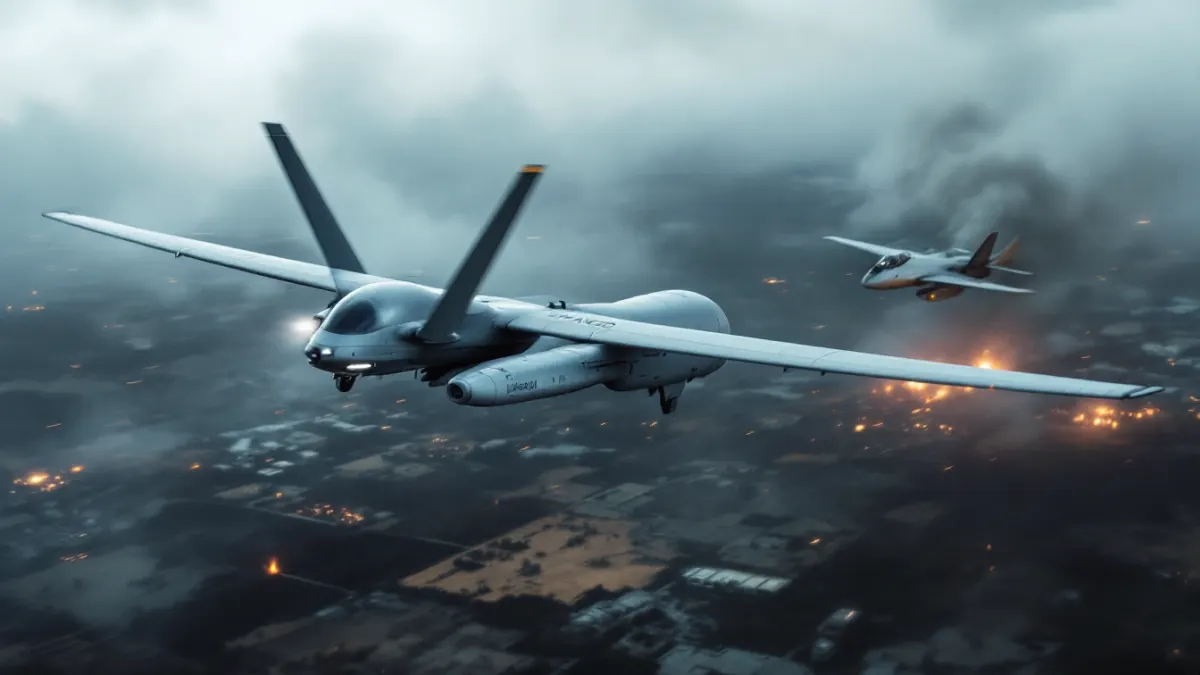
While drones are typically seen as deep-strike weapons, Russia is now using its Shahed drones to engage Ukrainian aircraft midair—flipping the script on battlefield tactics. Ukraine's deputy defense chief confirmed that Russian forces pilot these drones in real time near front lines across occupied regions and adjacent countries like Belarus.
This shift transforms the Shahed from a blunt mass-market missile into a responsive air-to-air threat, challenging traditional air defense systems. Kyiv’s reliance on aircraft for drone interception now faces the direct countermeasure of pilot-controlled Shaheds attempting to shoot down those very aircraft.
But this is not just about drones with explosives. It’s a strategic move that uses real-time control and positioning to disrupt Ukraine’s layered air defense, drastically complicating the operating environment.
“Every mission requires creativity, from the technical characteristics of the equipment to the planning and training of the pilots.”—Ukraine Special Operations Force
Why Treating Shaheds as Simple Missiles Misses the Point
Conventional wisdom treats suicide drones as one-way munitions targeting static ground positions. Russia’s adaptation to use operator-controlled Shahed drones near front lines undercuts this view.
Unlike earlier Shahed models fired on autopilot to distant targets, these drones operate with live pilots controlling them—enabling midair dogfights against helicopters and fixed-wing aircraft. This real-time control shortens defender reaction time and shifts air combat constraints toward sensor, communication, and pilot training bandwidth.
This reflects a deeper system leverage: Ukraine’s drone-led conflict has forced Russia to evolve tactics rapidly, blending drone swarm quantity with quality control. This is a pivot from brute force to constrained precision engagement.
How Shahed-107 and Pilot Control Create New Constraints
Russia introduced the Shahed-107 variant with a 10-foot wingspan, cross-shaped stabilizers, and carbon fiber frame, boosting its range to 300 kilometers and warhead weight to 15 kilograms.
Its operational range and design suggest these drones can strike frontline assets but also actively engage aerial targets. Combined with operator piloting through antennas in occupied Ukraine or Belarus, this enables near-continuous air engagement without relying solely on autopiloted strikes.
Unlike Western drone tactics focusing on surveillance or isolated strikes, this approach integrates drones into layered air defense dynamics, forcing Ukrainian commanders to rethink how they allocate scarce airborne assets to intercept threats effectively.
Ukraine’s deployment of helicopters and fighter jets as drone interceptors, as seen in the innovation in combat leverage, illustrates the adaptive response needed—but also stretches pilot and equipment availability.
What This Means for the Battlefield and Beyond
This shift in drone use changes the fundamental constraint from simple quantity of drones to real-time information and control bandwidth. Operators must manage signals, navigation, and threat prioritization live, which raises stakes for command-and-control infrastructure.
Countries observing Russia’s rapid Shahed innovation should study this as a system-level adaptation: combining mass production with tactical agility in drone warfare. It highlights how doubling down on operator control can amplify impact without exponential hardware scaling.
For Ukraine, countermeasures will demand better electronic warfare, faster pilot training, and integrated sensor networks to outpace drone operators. This technology and training race echoes broader themes of system design driving competitive edge in high-stakes conflict.
Operators who can coordinate assets and data flow rapidly will dominate the next generation of air combat. This dynamic is redefining leverage on Eastern Europe’s battlefields—and beyond.
Related Tools & Resources
In the complex and rapidly changing landscape of drone warfare, leveraging cutting-edge technology can make a significant difference. Tools like Blackbox AI can aid developers and defense strategists in creating more sophisticated systems, optimizing coding processes, and improving real-time data management for military applications. Learn more about Blackbox AI →
Full Transparency: Some links in this article are affiliate partnerships. If you find value in the tools we recommend and decide to try them, we may earn a commission at no extra cost to you. We only recommend tools that align with the strategic thinking we share here. Think of it as supporting independent business analysis while discovering leverage in your own operations.
Frequently Asked Questions
What are Shahed drones and how are they used by Russia?
Shahed drones, including the Shahed-107 variant with a 10-foot wingspan and 300 km range, are suicide drones used by Russia. Recently, they have been adapted for operator-controlled real-time midair engagement against Ukrainian aircraft near front lines, shifting from massed missile strikes to responsive air-to-air combat.
How do operator-controlled Shahed drones differ from traditional drone tactics?
Operator-controlled Shahed drones are piloted live near front lines, enabling midair dogfights with helicopters and fixed-wing aircraft. This contrasts with traditional drones that follow autopilot paths for static ground strikes, significantly reducing defender reaction times and complicating air defense.
What tactical challenges do Shahed drones pose to Ukraine's air defenses?
Shahed drones force Ukraine to adapt by deploying scarce airborne assets like helicopters and fighter jets for interception. Their live piloting disrupts Ukraine’s layered air defense, increasing the complexity of threat prioritization and stretching pilot and equipment availability.
What are the specifications and capabilities of the Shahed-107 drone?
The Shahed-107 features a 10-foot wingspan, cross-shaped stabilizers, a carbon fiber frame, a 300 km operational range, and a 15 kg warhead. It can strike frontline assets and actively engage aerial targets under operator piloting from territories like occupied Ukraine or Belarus.
How does real-time control of drones impact battlefield dynamics?
Real-time control shifts the fundamental constraint from drone quantity to information and control bandwidth. Operators must manage signals, navigation, and targeting live, raising demands on command-and-control infrastructure and enabling tactical agility in engagements.
What countermeasures can Ukraine implement against operator-controlled Shahed drones?
Ukraine needs improved electronic warfare capabilities, faster pilot training, and integrated sensor networks to outpace drone operators. These measures aim to mitigate the heightened threats posed by real-time operator control of drones in air combat.
How has Ukraine's drone-led conflict influenced Russian tactics with Shahed drones?
Ukraine’s widespread drone use has compelled Russia to evolve its tactics, blending swarm quantity with quality control via operator piloting, transitioning from brute force to precision engagement in drone warfare.
Why is operator control considered a force multiplier in drone warfare?
Operator control amplifies impact without requiring exponential hardware scale by enabling responsive targeting and continuous engagement. This system-level adaptation combines mass production with tactical agility, significantly enhancing weapon effectiveness.