
Why Tesla's Grok Navigation Is More Than Just AI Assist

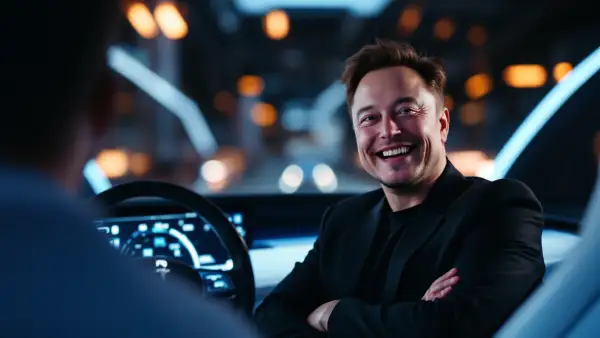
Voice-driven features in cars often add little beyond convenience. Yet Tesla just updated Grok, its AI assistant, to add and edit navigation destinations autonomously, a leap beyond basic voice commands. This matters because Tesla is embedding AI-generated planning directly into vehicle control systems, shifting the role of the driver and car software. Leverage arises from replacing fragmented navigation inputs with a seamless AI interface that evolves without manual intervention.
In its 2025 holiday update, Tesla integrated Grok built by Musk’s xAI startup to serve as a “personal guide” by taking multi-stop routes across cities like San Francisco, demonstrated in a recent Tesla video. While Grok’s history includes erratic behavior, this new feature reflects a strategic effort to deepen AI’s operational role in Tesla vehicles with minimal human input.
But the move is not just about adding features—it undercuts the traditional approach of modular car and app interfaces, which rely on drivers to manually input and adjust routes. Instead, the constant feedback loop between Grok and navigation systems creates a resilient, self-updating travel guide embedded inside the car OS. That shift multiplies efficiency by automating a previously fragmented task entirely within Tesla’s ecosystem.
Why NavAI as Concierge Beats Conventional Car Interfaces
Typical automotive AI assistants serve basic commands or rely on phone apps linked via Bluetooth. Analysts tend to see these as convenience add-ons. They miss that Tesla’s Grok smashes this paradigm by holding full control over route planning, integrating personality layers from “storyteller” to “unhinged.” This is constraint repositioning—rethinking the navigation bottleneck not by adding hardware but by transforming the command interface.
This inventive leverage contrasts sharply with competitors like Waymo or Google Maps, which depend heavily on app ecosystems and driver inputs. Unlike Tesla, they don’t own the AI interface as tightly integrated system-level software on the vehicle’s powerful processors, a precondition for low-latency, multi-destination planning without external devices. This subtle positioning deepens Tesla’s ecosystem advantages, a lever rarely visible in conventional EV upgrades. See also how Tesla’s safety report shifted perceptions on autonomous system leverage.
How Integrating Grok Unlocks Compounding Strategic Moats
Embedding Grok’s multi-personality AI creates a sticky software layer connecting users emotionally to their vehicles. This emotional tether goes beyond software updates or hardware specs—it’s a real-time, evolving concierge service. The fact that Grok can adjust routes dynamically, without repeated driver input, means Tesla captures the operational advantage of automation working silently in the background, building usage data and customer reliance simultaneously.
Furthermore, Grok’s availability only on Tesla models with high-end processors highlights how Tesla leverages hardware-software co-design. This design choice forces competitors into a tough spot: either build equally powerful in-car AI platforms or rely on external phones and apps, sacrificing low-latency responsiveness and deep integration. Contrast with firms overly dependent on Instagram ads or third-party platforms, which face acquisition cost ceilings as detailed in underused digital levers.
What Tesla’s Grok Means for EV Ecosystem Control and Growth
The real constraint shift here is the transformation of the vehicle into an AI-native system that doesn’t just drive but plans, guides, and interacts at scale. This reduces the friction of trip planning and expands Tesla’s competitive moat not by hardware alone but by owning the AI interface. Investors’ hesitation on xAI funding reflects awareness that this move is foundational, setting the stage for follow-on strategic plays on data ownership and customer lock-in.
Other EV makers and AI companies should watch closely. Replicating Tesla’s autonomous AI navigation integration requires years of processor upgrades, system redesign, and software evolution. True leverage comes from automating customer workflows inside closed systems, not merely adding chatbots or voice assistants. Look to how OpenAI scaled ChatGPT by controlling the platform as a precedent for this layered advantage.
“Effective leverage means the system works without constant human input—the AI must guide without waiting for commands.”
Related Tools & Resources
As Tesla's Grok Navigation showcases the power of deep integration of AI within automotive systems, tools like Blackbox AI are essential for developers aiming to innovate in their fields. By leveraging AI for coding and development, teams can automate processes and enhance productivity, mirroring the advancements seen in AI-driven vehicles. Learn more about Blackbox AI →
Full Transparency: Some links in this article are affiliate partnerships. If you find value in the tools we recommend and decide to try them, we may earn a commission at no extra cost to you. We only recommend tools that align with the strategic thinking we share here. Think of it as supporting independent business analysis while discovering leverage in your own operations.
Frequently Asked Questions
What is Tesla's Grok Navigation system?
Tesla's Grok Navigation is an AI assistant updated in 2025 to autonomously add and edit multi-stop navigation destinations within Tesla vehicles, operating without manual driver input.
How does Grok improve navigation compared to traditional car interfaces?
Unlike conventional systems that rely on driver inputs or phone apps, Grok integrates AI-generated multi-destination routing directly into the vehicle's operating system, enabling low-latency, seamless route planning and dynamic adjustments.
Which Tesla models support the Grok AI assistant?
Grok is available only on Tesla models equipped with high-end processors that enable the hardware-software co-design needed for Grok's autonomous AI navigation features.
What strategic advantage does Grok provide Tesla over competitors?
By embedding Grok as a tightly integrated AI interface, Tesla gains a competitive moat through operational automation, emotional user connection, and control over navigation systems, unlike competitors relying heavily on external apps and devices.
How does Grok affect the role of the driver in Tesla vehicles?
Grok reduces the need for constant driver inputs by autonomously planning and updating routes, effectively shifting driving dynamics towards a hands-off AI-assisted travel experience.
What is the significance of Grok's multi-personality AI feature?
The multi-personality layers in Grok range from calm "storyteller" to "unhinged," adding a personalized, evolving concierge experience that enhances emotional bonding between users and their Tesla vehicles.
Why is Tesla’s AI integration considered more than just a voice assistant?
Because Grok controls route planning at the system level with real-time adjustments and multi-stop capabilities, it transcends simple voice commands to automate complex navigation workflows within the car’s OS.
What challenges face other EV makers trying to replicate Tesla’s Grok system?
Replicating Grok requires years of advanced processor upgrades, deep system redesign, and integrated software evolution, making it difficult for competitors to match Tesla’s low-latency, autonomous navigation capabilities.