
Why Tesla's Robotaxi Test in Austin Signals a Shift in Autonomous Leverage

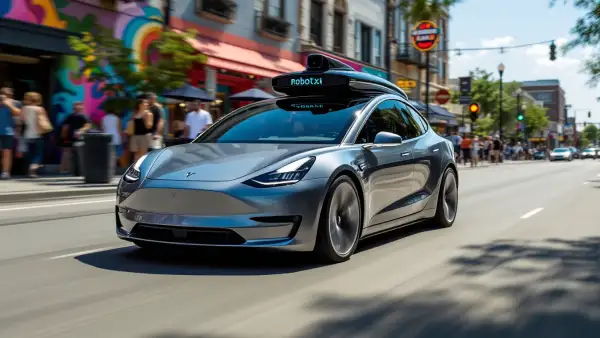
Autonomous vehicle programs globally often rely on human safety monitors, driving up operational costs and limiting scale. Tesla is testing fully driverless robotaxis on Austin's streets with no human safety operators, a first among major fleets. But this move is less about tech bravado and more about flipping the key constraint—human oversight—to unlock true scale. Without constant human intervention, Tesla's system operationalizes leverage unlike any autonomous fleet today.
Why Removing Safety Drivers Is Not Just Cost Cutting
Conventional wisdom sees human safety monitors as essential for risk mitigation. Yet they remain the largest bottleneck preventing robotaxi fleets from scaling profitably. Tesla CEO Elon Musk announced tests of driverless taxis with no occupants in Austin, aiming to remove safety monitors completely by year-end.
This isn't merely a cost reduction play. It's a strategic repositioning of the core constraint that shifts execution from people to AI-driven systems. The same challenge hampering competitors like Waymo and Cruise—high human oversight costs and slow regulatory escalation—is the constraint Tesla is aiming to upend.
See analysis on why Tesla’s new safety report changes autonomous leverage for deeper context.
How Tesla’s Approach Compounds Advantage in Austin
Since launching in June, Tesla’s robotaxi fleet grew from 29 to 31 active vehicles in Austin, with CEO Musk targeting 500 cars by year-end. Previous tests required human monitors to intervene multiple times, underscoring this constraint’s impact on scale and safety.
By removing safety drivers, Tesla drops acquisition cost per ride dramatically—no more paying for human monitors or their scheduling logistics. This converts a linear cost (human hours) to a fixed infrastructure cost (AI and vehicle hardware), creating a compounding leverage effect as fleet size grows.
Unlike Uber and Lyft, which rely on human drivers, or Waymo and Cruise, still tightly controlled by safety crews, Tesla’s system runs autonomously in a live urban environment at scale. This strategic move replicates the operational leverage seen in software firms rather than traditional ride-hailing.
Refer to how OpenAI scaled ChatGPT for parallels in turning costly human inputs into self-reinforcing systems.
What This Means for Autonomous Mobility and Beyond
The key constraint in autonomous mobility has been the reliance on human safety monitors overseeing AI–a model that caps scale and inflates costs. Tesla’s driverless robotaxi tests in Austin break this constraint, unlocking a new operational phase.
Other cities and autonomous operators must rethink how to shift from people-based risk control to AI trust, transforming the deployment model. This creates a strategic entry barrier that's not about owning more cars, but owning the autonomous AI system validated without human fallback.
Investors and operators watching this transition should focus less on vehicle numbers and more on system trust and safety frameworks. Tesla’s Austin test signals leverage through removing the ‘human in the loop’, a threshold few competitors have crossed.
As Musk put it, “There will be Tesla robotaxis operating in Austin with no one in them, not even anyone in the passenger seat, in about three weeks.” That isn’t just a milestone; it’s a shift in how leverage is created in autonomous transport.
Related Tools & Resources
As Tesla's advancements in autonomous driving demonstrate the power of AI in operational efficiency, tools like Blackbox AI can empower developers to leverage similar technology in their projects. Automating code generation can help tech companies create robust applications that capitalize on AI-driven scalability, creating the competitive edge that is crucial in today's fast-evolving landscape. Learn more about Blackbox AI →
Full Transparency: Some links in this article are affiliate partnerships. If you find value in the tools we recommend and decide to try them, we may earn a commission at no extra cost to you. We only recommend tools that align with the strategic thinking we share here. Think of it as supporting independent business analysis while discovering leverage in your own operations.
Frequently Asked Questions
What is Tesla's robotaxi test in Austin?
Tesla is testing fully driverless robotaxis on Austin's streets without human safety operators, aiming to remove safety monitors completely by year-end. This test marks a strategic shift away from reliance on human oversight in autonomous driving.
How many Tesla robotaxis are currently active in Austin?
Since launching in June, Tesla's robotaxi fleet in Austin has grown from 29 to 31 active vehicles. CEO Elon Musk has set a target of expanding the fleet to 500 cars by the end of the year.
Why is Tesla removing human safety drivers in its robotaxi fleet?
Removing human safety drivers significantly reduces operational costs by eliminating the linear expense of paying human monitors and logistical scheduling. It shifts control to AI-driven systems, enabling Tesla to scale its fleet more efficiently than competitors relying on human oversight.
How does Tesla's approach differ from competitors like Waymo and Cruise?
Unlike Waymo and Cruise, which still use human safety monitors and face regulatory challenges, Tesla runs its robotaxi system fully autonomously in a live urban environment. This approach enables Tesla to operationalize leverage similar to software firms rather than traditional ride-hailing services.
What impact does removing safety drivers have on the cost structure of robotaxi fleets?
Removing safety drivers converts the cost from linear human labor hours to fixed infrastructure costs involving AI and vehicle hardware. This creates a compounding leverage effect as the fleet size grows, dramatically reducing acquisition cost per ride.
What does Tesla's robotaxi test mean for the future of autonomous mobility?
Tesla's driverless robotaxi tests in Austin break the key constraint of human oversight that has limited scale and inflated costs in autonomous mobility. It signals a shift towards AI trust and scalable deployment models, setting a new strategic entry barrier based on autonomous system validation.
Are there other technologies related to Tesla's autonomous driving advancements?
Yes, tools like Blackbox AI empower developers to leverage similar AI technology to automate code generation and create scalable, efficient applications. These advancements reflect the broader impact of AI on operational efficiency beyond autonomous vehicles.
When does Elon Musk expect Tesla robotaxis to operate with no occupants?
Elon Musk stated that Tesla robotaxis would operate in Austin with no occupants, including no one in the passenger seat, in about three weeks from the announcement, marking a significant milestone in autonomous transport.