Why Tesla’s Texting Move Reveals a Hidden Automation Constraint
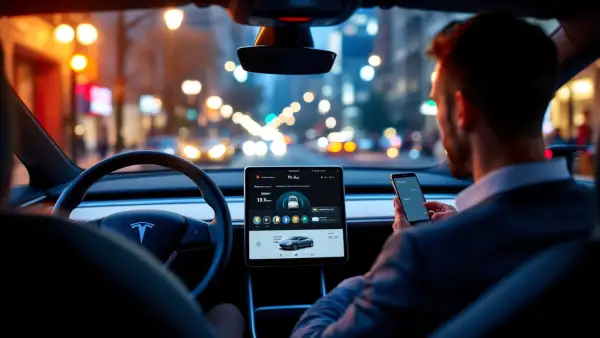
Distracted driving causes over 3,200 deaths annually in the U.S., yet Elon Musk now signals that Tesla owners will soon be able to text while driving using Full Self-Driving (FSD) v14. This is despite texting being illegal in nearly every state except Montana. Tesla’sautomated driving systems and regulatory compliance. True leverage requires automation that transforms, not just augments, human behavior.
Why Tesla’s move clashes with automation’s intended role
Conventional wisdom holds that Partial Automation (Level 2) like Tesla’s FSD merely assists drivers while they stay engaged, preventing distraction. Yet Elon Musk aims to allow texting — a behavior universally banned because of high safety risks. Industry experts, including the Insurance Institute for Highway Safety, argue this undercuts the very safety rationale behind these features.
This tension reveals a critical constraint: partial automation relies on a “human-in-the-loop” model that demands active attention. Allowing texting repositions the constraint from technical capability to legal and cognitive safety boundaries. This follows a similar pattern with other tech firms where system-level leverage is constrained by regulatory frameworks, as explored in why 2024 tech layoffs reveal structural leverage failures.
FSD’s partial automation hits a legal and behavioral ceiling
Tesla’s FSD includes traffic-aware cruise control, autosteer, and autopark, but remains classified as a Level 2 system requiring driver readiness. Unlike full Level 4 or 5 autonomy, it can’t independently handle every scenario. The National Highway Traffic Safety Administration (NHTSA) opened an investigation after reports of FSD-equipped vehicles running red lights and causing accidents.Unlike hypothetical full autonomy competitors aiming to remove the driver altogether, Tesla’s system still constrains driver behavior. Its policy still warns against handheld phone use while on Autopilot, reflecting this partial leverage ceiling. Allowing texting prematurely shifts the risk calculus from technology processing limits to human cognitive overload. This flips the script on how leverage works in mobility automation, similar to shifts seen in AI systems’ human-in-the-loop designs discussed in why AI actually forces workers to evolve.
Texting while driving exposes leverage gaps in Tesla’s automation strategy
Elon Musk’s confidence that Tesla’s FSD could soon enable “multitasking” drivers highlights the real constraint that remains unaddressed: robust, fault-tolerant system design that fully removes human error risks. Until full autonomy reaches that point, the leverage gains from automation are partial and require constant human attention.This differs from companies pursuing true autonomous scaling where the system itself carries responsibility, exponentially reducing risk and human constraints. Tesla’s current approach hedges by layering software on top of human drivers who remain integral parts of the control loop.
Why understanding this constraint matters for future autonomous leverage
Change in regulation or genuine Level 4/5 autonomy breakthroughs will redefine this constraint and unlock massive leverage for companies like Tesla. Until then, the partial nature of automation forces a compliance and safety ceiling that prevents fully hands-off, distraction-tolerant driving.
Operators must watch for shifts from partial to full autonomy as the key leverage inflection point. Unlike current supervised systems, full autonomy changes driver roles from controller to passenger, reducing cognitive load and regulatory friction.This dynamic underscores why understanding system-level constraints is crucial for strategic bets in mobility and automation. Leverage isn’t just what technology can do — it’s what the system, laws, and human factors let it do sustainably.
Related Tools & Resources
For businesses navigating the complexities of automated driving systems, tools like Apollo enable a data-driven approach to B2B collaboration. Given the intricacies highlighted in Tesla's strategies, leveraging a powerful sales intelligence platform can help ensure that the right strategic decisions are made to align with regulatory and safety considerations. Learn more about Apollo →
Full Transparency: Some links in this article are affiliate partnerships. If you find value in the tools we recommend and decide to try them, we may earn a commission at no extra cost to you. We only recommend tools that align with the strategic thinking we share here. Think of it as supporting independent business analysis while discovering leverage in your own operations.Frequently Asked Questions
Why is texting while driving a concern with Tesla's Full Self-Driving (FSD) system?
Texting while driving is a safety concern because it causes distraction and is illegal in nearly every U.S. state except Montana. Tesla's FSD v14 aims to allow texting while driving, which experts warn increases risks despite the system's partial automation features.
What level of automation does Tesla’s Full Self-Driving (FSD) currently support?
Tesla's FSD is classified as a Level 2 partial automation system. It assists drivers with traffic-aware cruise control, autosteer, and autopark but still requires the driver to remain attentive and ready to control the vehicle at all times.
How many deaths are caused annually by distracted driving in the U.S.?
Distracted driving leads to over 3,200 deaths each year in the United States, highlighting why texting while driving remains a critical safety issue.
What legal challenges does Tesla face with its FSD system enabling texting while driving?
Texting while driving is illegal in nearly all U.S. states except Montana, so Tesla enabling this feature raises regulatory and legal compliance challenges. The National Highway Traffic Safety Administration (NHTSA) has also opened investigations related to FSD safety incidents.
What is the "human-in-the-loop" model in the context of Tesla's automated driving?
The "human-in-the-loop" model requires drivers to remain engaged and attentive while using partial automation. Tesla's current system depends on this model, meaning the driver must actively supervise the system and is still critical to vehicle control.
How does Tesla’s approach differ from full Level 4 or 5 autonomy?
Unlike full Level 4 or 5 autonomy, Tesla's FSD cannot handle all driving scenarios independently. Full autonomy would remove the need for driver attention, but Tesla's partial system still constrains driver behavior and requires active involvement.
What are the implications of Tesla allowing texting while driving with FSD?
Allowing texting shifts safety risks from technological limitations to human cognitive overload. This exposes leverage gaps in Tesla’s strategy and suggests that the system is not yet robust enough to fully remove human error or distraction risks.
What future changes could unlock more automation leverage for Tesla?
Regulatory changes or breakthroughs achieving genuine Level 4 or 5 autonomy could remove current constraints and enable fully hands-off, distraction-tolerant driving. Until then, a compliance and safety ceiling limits the leverage of partial automation systems like Tesla’s FSD.