
Why The U.S. Shutdown of Alcohol Trade Bureau Hits Spirits Hard Now

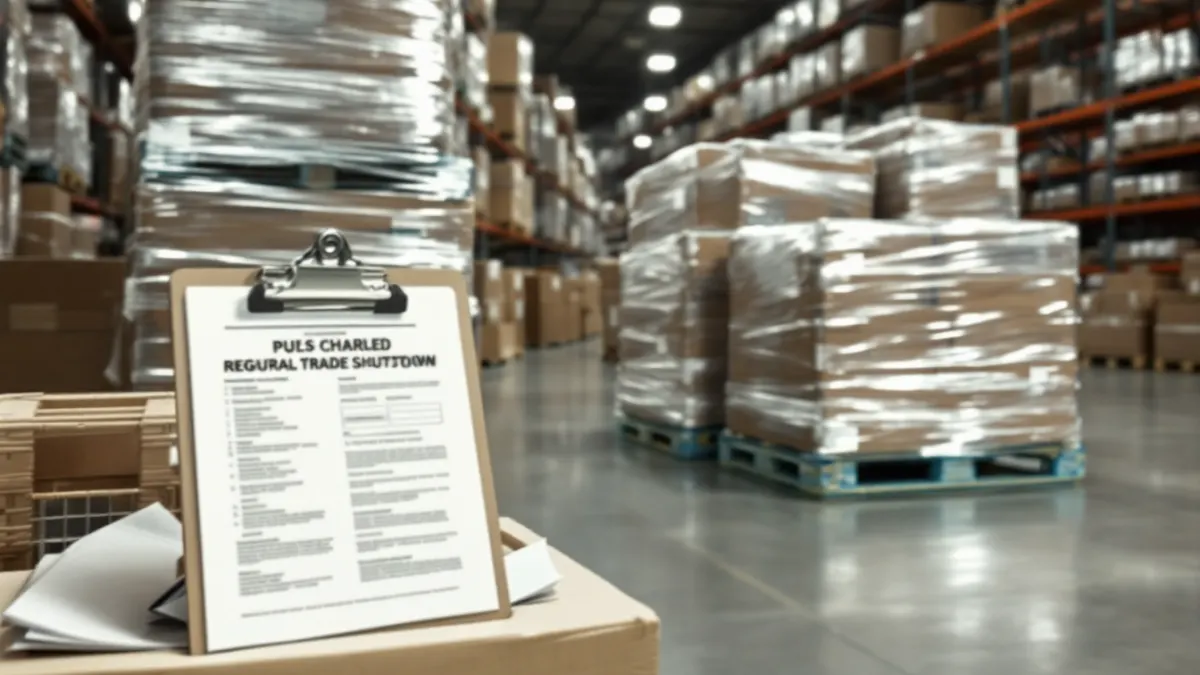
Holiday season drives more than 30% of annual U.S. alcohol sales, yet the Alcohol and Tobacco Tax and Trade Bureau (TTB) shutdown is stalling approvals. This delay contrasts with prior years when regulatory pauses happened non-disruptively.
TTB, the federal agency controlling alcohol label and formula approvals nationwide, has paused operations amid a government shutdown, blocking key processes for brands across the United States. The impact cascades through complex supply chains just as demand peaks.
This is more than a bureaucratic hiccup—it's a constraint in the governmental approval system that directly throttles product launches and distribution visibility during critical selling months.
Regulatory constraints become economic constraints when fixed systems can’t flex with market cycles.
Why The Shutdown Is Not Just 'Cost-Cutting'
Conventional wisdom treats a TTB shutdown as standard governmental pause with limited business impact. That misses how the fixed approval pipeline acts as a leverage point.
Unlike industries where companies control key assets, alcohol brands hostage to TTB’s approval cycle face a bottleneck that shifts costs to inventory and lost sales. This resembles how manufacturers stalled when business continuity planning fails in critical dependencies.
While tech firms layer resilience with cloud scalability or workflows, TTB’s manual and centralized approvals lack automation or parallel processing. The constraint is systemic, not just fiscal.
The Systemic Leverage of Government Bottlenecks
TTB’s centralized approval system is a gatekeeper that compounds delays exponentially because it prevents partial or rolling approvals—unlike regulatory systems in Canada or the EU that allow decentralized or provisional certifications.
This rigid system multiplies downstream operational friction: brands can’t finalize labeling, which stalls retailer stocking and marketing campaigns, sometimes dropping revenue by double digits in peak season.
By contrast, countries like Canada have invested in partial automation allowing preliminary approvals within days, reflecting a strategic leverage move to decouple regulatory flow from political interruptions.
Without such automation, the U.S. alcohol industry incurs a larger hidden cost: the inability to flex supply chains or exploit seasonal demand surges. This is similar to how automation unlocks business leverage in private sectors, but government systems lag.
Turning A Dependency Into Opportunity
The key constraint has shifted from production or distribution to regulatory throughput. Suppliers and retailers who ignored this dependency now face lost sales and stranded inventory.
Operators must now integrate regulatory timing into supply chain and launch planning actively, a form of strategic partnership with compliance entities—or push for digitization to build parallel paths that operate semi-autonomously during federal disruptions.
Other industries show that reshaping bottlenecks from manual to automated systems creates scalable advantage. The drinks industry’s 2025 shutdown is a case study in why relying on rigid public systems limits growth—and how leverage hides in shifting where and how constraints are managed.
In government-regulated sectors, the biggest leverage comes from reshaping approval systems, not just product innovation.
Related Tools & Resources
Navigating regulatory bottlenecks requires clear operational processes that keep teams aligned despite external disruptions. Platforms like Copla help businesses document and streamline their standard operating procedures, enabling consistent execution even when approvals and external dependencies cause delays. For companies facing constrained approval workflows like those imposed by the TTB shutdown, Copla offers a practical way to maintain operational resilience and agility. Learn more about Copla →
Full Transparency: Some links in this article are affiliate partnerships. If you find value in the tools we recommend and decide to try them, we may earn a commission at no extra cost to you. We only recommend tools that align with the strategic thinking we share here. Think of it as supporting independent business analysis while discovering leverage in your own operations.
Frequently Asked Questions
What impact does the Alcohol and Tobacco Tax and Trade Bureau (TTB) shutdown have on alcohol sales?
The TTB shutdown stalls necessary label and formula approvals, disrupting supply chains during the holiday season that drives over 30% of annual U.S. alcohol sales, leading to inventory delays and lost sales revenue by double digits in peak months.
Why is the TTB approval process considered a bottleneck for alcohol brands?
The TTB uses a centralized, manual approval system without automation or parallel processing, which causes exponential delays, unlike other countries that allow partial or rolling approvals, limiting brands' ability to launch and distribute products efficiently.
How do regulatory constraints become economic constraints in the alcohol industry?
Fixed approval systems like TTB's create bottlenecks that shift costs onto inventory and lost sales, preventing brands from adapting to market cycles and demand surges, thus converting regulatory delays into financial losses.
How do other countries manage alcohol regulatory approvals differently from the U.S.?
Countries like Canada have partial automation in their regulatory systems enabling preliminary approvals within days, decoupling regulatory flow from political interruptions and allowing more flexible supply chain responses.
What strategies can alcohol suppliers use to mitigate impacts from TTB shutdowns?
Operators should integrate regulatory timing into supply chain and launch planning as a form of strategic partnership or push for digitization to build parallel approval paths that continue during federal disruptions.
How does the lack of automation in TTB approvals affect the drinks industry?
TTB’s manual, centralized process creates systemic constraints that stall labeling and marketing, resulting in operational friction and potentially double-digit revenue drops during peak selling periods.
What role can operational platforms like Copla play during regulatory shutdowns?
Platforms like Copla help businesses document and streamline standard operating procedures to maintain operational resilience and agility despite approval delays caused by shutdowns such as the TTB’s.
Why is reshaping approval systems considered more critical than just product innovation in regulated industries?
Because government-regulated sectors face bottlenecks that limit growth, reshaping approval processes through automation and decentralization provides scalable advantages beyond what product innovation alone can achieve.