
Why Titan OS’s $58M Raise Signals a Smart TV OS Shift

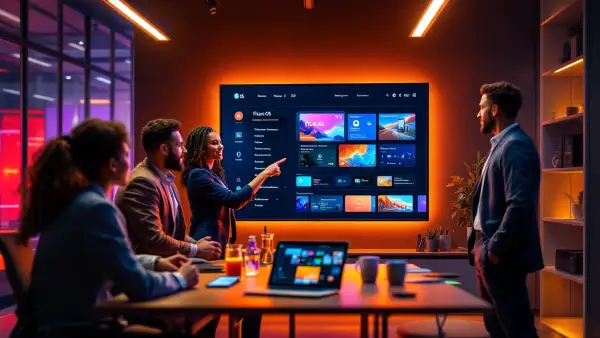
Smart TVs in Europe and Latin America face dominated ecosystems with limited alternatives. Titan OS is challenging that by raising $58 million from Highland Europe to expand its independent TV operating system across these regions.
This move isn’t just a funding announcement—it's a strategic play to crack a locked market dominated by pre-installed systems from Google and Amazon.
By designing an independent OS, Titan OS targets the critical constraint: operating system control, which dictates what apps and services reach billions of users.
Operating system independence is the digital leverage that quietly redefines who owns consumer attention in smart entertainment.
Why controlling the smart TV OS isn’t just about software
The common narrative sees smart TV OS competition as a feature race driven by user experience. This misses the bigger systemic constraint: platform gatekeeping.
Unlike smartphones where Google and Apple dominate, smart TVs remain more fragmented but entrenched. Titan OS’s expansion disrupts this by building a system that reduces reliance on Google’s Android TV and Amazon Fire OS.
This constraint repositioning is akin to how OpenAI turned chat interfaces into distribution engines—own the platform layer, and you own the flow of user value.
Concrete leverage through geographic focus and integration
Titan OS targets Europe and Latin America, regions with rising smart TV adoption but less entrenched OS ecosystems than the U.S. or China. This regional focus exploits localized content demands and regulatory environments favoring OS diversity.
Unlike incumbents who invest ad spend in costly user acquisition or rely heavily on content licenses, Titan OS builds leverage by owning the OS pipeline. It reduces customer acquisition costs from tens of dollars per user to infrastructure costs alone.
Competitors like Google’s Android TV and Amazon Fire TV focus heavily on ecosystem lock-in and hardware partnerships, but they rarely face OS-level challengers with independent, regionalized strategies.
How this changes TV market dynamics and platform control
By raising $58 million, Titan OS buys runway to scale an OS that can autonomously onboard manufacturers and developers without constant human sales intervention.
This turns the operating system into a compoundable asset, extending reach and controlling feature updates, content partnerships, and user data flows.
The move signals a shift from fragmented smart TV user bases to system-wide control—the kind of leverage that enables negotiation with content providers, advertisers, and device makers on far more equal footing.
Who wins when OS control breaks open in these regions?
Stakeholders in Europe and Latin America should watch this closely. This isn’t just about better TV software; it’s a strategic repositioning of market constraints.
Local manufacturers gain bargaining power, developers find new ecosystems, and consumers get more choice. Other emerging markets may replicate this playbook, challenging the duopoly of Google and Amazon.
Dynamic work charts and WhatsApp’s chat integration show parallel examples of how platform control drives systemic growth without linear effort.
In platform economics, owning the operating system is owning the field of play.
Related Tools & Resources
As Titan OS expands into competitive markets, tools like Brevo can enhance communication strategies by automating marketing efforts effectively. By leveraging Brevo's integrated email and SMS marketing capabilities, businesses can ensure they stay connected with consumers while navigating these changing dynamics in the smart TV industry. Learn more about Brevo →
Full Transparency: Some links in this article are affiliate partnerships. If you find value in the tools we recommend and decide to try them, we may earn a commission at no extra cost to you. We only recommend tools that align with the strategic thinking we share here. Think of it as supporting independent business analysis while discovering leverage in your own operations.
Frequently Asked Questions
What is Titan OS and what makes it different from other smart TV operating systems?
Titan OS is an independent smart TV operating system focusing on Europe and Latin America. Unlike Google’s Android TV or Amazon Fire OS, it aims to reduce platform gatekeeping by offering OS-level control and a regionalized strategy, challenging the dominant ecosystems.
How much funding did Titan OS recently raise and what is its purpose?
Titan OS recently raised $58 million from Highland Europe. The funding is intended to expand its independent TV operating system in Europe and Latin America, enabling autonomous onboarding of manufacturers and developers while reducing customer acquisition costs.
Why is controlling the smart TV operating system important?
Controlling the smart TV OS is critical because it dictates which apps and services can reach billions of users. Owning the platform layer allows companies to control user value flow, feature updates, content partnerships, and user data, providing significant leverage in the smart TV market.
Which regions is Titan OS targeting for its expansion and why?
Titan OS is targeting Europe and Latin America due to rising smart TV adoption and less entrenched OS ecosystems compared to the US or China. These regions also favor OS diversity through localized content demands and regulatory environments, offering an opportunity for an independent OS.
How does Titan OS's strategy differ from competitors like Google and Amazon?
Titan OS builds leverage by owning the OS pipeline with an autonomous onboarding system, reducing reliance on human sales and costly user acquisition. In contrast, Google and Amazon focus heavily on ecosystem lock-in and hardware partnerships, with less regionalized OS independence.
What benefits does Titan OS provide to local manufacturers and consumers?
By breaking open OS control, Titan OS gives local manufacturers more bargaining power and developers new ecosystems to enter. Consumers benefit from greater choice and less ecosystem lock-in, potentially replicating this model in other emerging markets beyond Europe and Latin America.
How does Titan OS's expansion signal a shift in the smart TV market?
The $58 million raise allows Titan OS to scale an OS asset that can onboard partners without constant sales, turning the OS into a compoundable asset. This signals a shift from fragmented smart TV user bases to system-wide control, enabling better negotiation with content providers and advertisers.
Are there any tools recommended to complement Titan OS’s market approach?
Yes, the article suggests tools like Brevo, which can help businesses automate marketing strategies through integrated email and SMS campaigns. This is especially helpful as businesses navigate the evolving smart TV industry dynamics introduced by Titan OS.