
Why Trump Naming Warsh and Hassett Signals Fed Control Battle

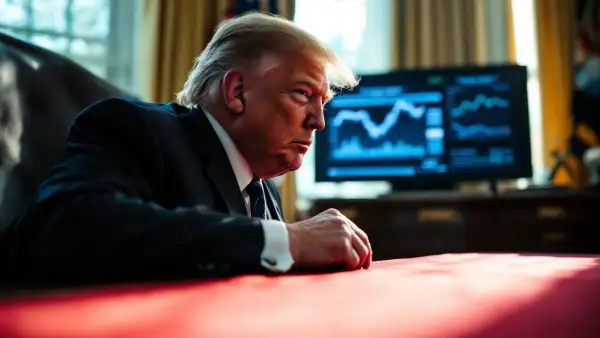
Presidential influence over the Federal Reserve is rare—yet President Donald Trump is openly pushing to reshape this norm by naming Kevin Hassett and Kevin Warsh as his top Fed chair contenders. Trump's White House advocates for tighter interest rate consultation with the executive branch, a departure from the Fed's usual independence.
This move matters beyond personalities: the US central bank's autonomy shapes global markets and domestic economic leverage. By signaling that the next Fed chair must align with his borrowing cost views—favoring rates near 1%—Trump confronts the traditional constraint separating monetary policy from political influence.
But this isn't just a leadership choice. It's a push to embed strategic leverage into the US economic system by blurring institutional boundaries. Wall Street Journal coverage shows Warsh’s rise challenges Hassett, signaling a tug-of-war for control over the money supply.
“The Fed’s independence is the line that controls the game,” one must recognize. Here, that line is shifting, and whoever wins secures not just a chair but systemic power.
Conventional Wisdom Misses the Real Constraint Shift
Market watchers typically see Fed chair appointments as routine political plays that stop short of institutional change. The norm insists the Fed operates without the president’s direct interference, preserving confidence in monetary policy.
But Trump’s demand for consultation, revealed through his explicit statements and meetings with Warsh, cracks open this façade. Analysts often overlook that the real battleground is control over the institutional decision layer. This isn't just about cutting interest rates — it's about who controls the algorithms governing economic leverage.
See how Fed uncertainty already influences markets and tech stocks.
Mechanics of Federal Reserve Leverage Under Trump’s Vision
Interest rate policy constrains borrowing costs and inflation, directly affecting economic growth. With Jerome Powell resistant to deep cuts, Trump’s pick for Fed chair will determine if the US embraces looser credit or tighter control.
Warsh advocates for lower borrowing costs, aligning with Trump’s push for aggressive rate cuts. This could shift the Fed’s leverage mechanism towards stimulating growth via expansive credit availability, but risks overheating the economy.
Compared to Europe’s European Central Bank, which maintains firmer independence, the US system is showing cracks in its checks and balances. Unlike models where monetary policy is insulated, this shift repositions constraints to favor executive influence.
Additional context is found in how the US dollar responds amid rate cut speculation, signaling market sensitivity to Fed leadership changes.
Strategic Implications of Presidential Consultation on Interest Rates
If the next Fed chair regularly consults President Trump, the traditional operational independence is compromised. This creates a structural advantage for the executive branch to shape economic outcomes without legislative input.
Operators watching this must note the constraint shift: policy is no longer insulated from political winds but is potentially a direct lever for administration priorities. This alters how businesses plan capital expenditures and risk management under a politicized central bank.
Emerging markets, often vulnerable to US monetary policy, should closely watch this dynamic. Replicating influence over their central banks could yield similar leverage, but risks systemic volatility.
“Control over monetary policy is the ultimate economic lever—and it’s now back in political play.”
Learn more about how Fed uncertainty is quietly reshaping financial markets and why the US dollar behaves counterintuitively during these shifts.
Related Tools & Resources
Understanding the interplay between central bank policies and market responses can greatly enhance your strategic insights. Just as businesses must adapt to the Fed's changing influence, leveraging tools like Hyros for ad tracking can provide invaluable data and ROI visibility that aligns with these economic shifts. Learn more about Hyros →
Full Transparency: Some links in this article are affiliate partnerships. If you find value in the tools we recommend and decide to try them, we may earn a commission at no extra cost to you. We only recommend tools that align with the strategic thinking we share here. Think of it as supporting independent business analysis while discovering leverage in your own operations.
Frequently Asked Questions
Why is President Trump's naming of Warsh and Hassett significant for the Federal Reserve?
Trump's choice of Kevin Warsh and Kevin Hassett as potential Fed chairs challenges the Federal Reserve's traditional independence by pushing for closer executive consultation, impacting interest rate policies near 1% borrowing costs.
What does Fed independence mean and how is it changing?
Fed independence means the central bank operates without presidential interference to maintain stable monetary policy. Trump's demand for consultation and alignment on interest rates signals a shift, potentially politicizing Fed decisions.
Who are Kevin Warsh and Kevin Hassett in the context of the Federal Reserve?
Kevin Warsh and Kevin Hassett are top contenders for Fed chair under Trump. Warsh supports lower borrowing costs aligning with Trump’s push for aggressive rate cuts, while Hassett is his other key candidate in the control battle over Fed policy.
How could Trump's influence impact interest rates and the economy?
If the next Fed chair consults Trump regularly, the Fed may favor borrowing costs near 1%, loosening credit to stimulate growth but risking economic overheating.
How does this potential shift compare with other central banks like the European Central Bank?
Unlike the more independent European Central Bank, the US Federal Reserve under Trump's vision may see increased executive influence, reducing traditional monetary policy insulation.
What strategic implications does presidential consultation on interest rates have for businesses?
Closer executive control over Fed policy means businesses face less predictable monetary environments, influencing capital expenditure and risk management strategies amid political influence on the economy.
How might emerging markets be affected by this change in US Fed control?
Emerging markets, sensitive to US monetary policy, could see increased volatility if they replicate such political influence on their central banks, risking systemic financial instability.
What resources are recommended for understanding market responses to Fed policy shifts?
Tools like Hyros can provide enhanced data and ROI visibility for businesses adapting to changes in Fed influence, offering strategic insights into market and economic dynamics.