
Why Trump’s $1,776 Warrior Dividend Masks Tariff Revenue Limits

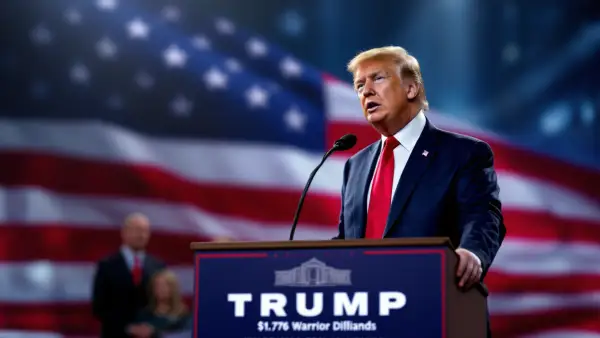
Tariff revenue was expected to exceed $500 billion annually but currently lags $100 billion behind, disrupting planned economic relief. President Donald Trump announced a $1,776 “warrior dividend” for 1.45 million U.S. military personnel ahead of the holidays to ease cost-of-living pressures. While tariffs initially boosted government income, the real story is a shift in import behavior reducing revenue and forcing budget reprioritization. “Government streams that promise automatic payouts require constant demand-side leverage to sustain,” underscored a senior analyst.
Why economic relief isn’t just about tariffs
Conventional wisdom holds that tariffs create a reliable, self-funding revenue stream for government payouts. The administration’s public narrative credits tariffs and the “One Big Beautiful Bill” with enabling the warrior dividend and other programs like a $12 billion farmer bailout. Yet economists and Treasury forecasts reveal tariffs are bringing in about $400 billion yearly, $100 billion less than estimates. This shortfall exposes a hidden constraint: tariffs depend on consistent import volumes, which have shrunk substantially.
For strategic context, this nuance is critical beyond politics—it challenges assumptions about sustainable funding mechanisms. Unlike direct tax hikes or appropriations, tariffs’ compound effect depends on steady trade flows, which are volatile and influenced by corporate sourcing shifts. This recalls broader themes covered in why 2024 tech layoffs reveal structural leverage failures, where surface metrics mask fragile foundations.
How changes in import patterns undermine tariff leverage
U.S. imports from China dropped more than 7% year-over-year in recent months as companies redirected sourcing to lower-tariff countries like Vietnam. This dramatically reduced customs duty collections despite earlier stockpiling ahead of tariff hikes. For example, customs duties peaked month-over-month between April and October but slipped in November, signaling a peak in tariff leverage. Other countries imposing tariffs don’t face this scale of corporate rerouting, illustrating how leverage here is constrained by global trade elasticity.
This dynamic compares to simpler interventions like the leveraged user growth at OpenAI, where infrastructure directly fuels scale. Tariff revenue, however, is a passive income stream vulnerable to strategic import substitutions. This makes the government’s promise of tariff-funded dividends structurally risky without active enforcement or alternative funding mechanisms.
Why military dividends highlight shifting fiscal constraints
The $2.6 billion allocated for the warrior dividend came largely via the “One Big Beautiful Bill,” with Congress appropriating $2.9 million for housing allowance supplements. The White House’s claim that tariffs directly fund these checks glosses over the sizeable budget backstop required. Treasury Secretary Scott Bessent’s comments that dividends might come as tax breaks rather than direct checks illustrate internal recognition of these constraints.
Reliance on tariffs as a leverage point to slash debt or finance dividends underestimates the complexities of import-driven revenue. Unlike a stable software royalty or subscription, tariff revenue is a leaky faucet constrained by shifting international supply chains and corporate incentives. This echoes insights from why debt systems like Senegal’s reveal structural fragility, where revenue assumptions clash with real-world adjustments.
Forward-looking leverage and strategic payers
The shift in tariff revenue forces government operators and military compensation planners to reconsider constraints on funding relief efforts. Innovators in public finance must explore hybrid mechanisms combining appropriations and dynamic incentives to maintain funding flows. Future policymakers should watch how adjustments to international trade and sourcing affect domestic fiscal levers.
For operators, the lesson is stark: leverage based on external supply chains requires continuous monitoring and fallback strategies, not one-off windfall assumptions. Countries facing similar trade pressures can learn from this interplay of tariff policy and budget realities. The promise of easily tapped revenue streams is alluring but fragile without systemic design to lock in those cash flows sustainably.
Related Tools & Resources
If you're looking to enhance the efficacy of revenue-driven strategies, tools like Hyros can help optimize your advertising efforts by providing advanced tracking capabilities. This approach aligns perfectly with strategically managing budget constraints, ensuring that every dollar spent on marketing yields the best return. Learn more about Hyros →
Full Transparency: Some links in this article are affiliate partnerships. If you find value in the tools we recommend and decide to try them, we may earn a commission at no extra cost to you. We only recommend tools that align with the strategic thinking we share here. Think of it as supporting independent business analysis while discovering leverage in your own operations.
Frequently Asked Questions
What is the $1,776 warrior dividend announced by President Trump?
The $1,776 warrior dividend is a payment announced by President Donald Trump for 1.45 million U.S. military personnel, intended to ease cost-of-living pressures ahead of the holidays.
How much tariff revenue was originally expected and what is the actual revenue?
Tariff revenue was originally expected to exceed $500 billion annually, but it currently lags about $100 billion behind, bringing in roughly $400 billion per year.
Why are tariffs bringing in less revenue than expected?
Tariffs depend on consistent import volumes, which have shrunk due to companies shifting sourcing to lower-tariff countries like Vietnam. For example, U.S. imports from China dropped more than 7% year-over-year recently, reducing customs duty collections.
How does the shift in import patterns affect tariff revenue?
The shift in import patterns, particularly reduced imports from China, has caused a peak and subsequent drop in customs duties collected, undermining tariff leverage as a reliable funding source.
Is the $1,776 warrior dividend fully funded by tariffs?
No, the $2.6 billion allocated for the warrior dividend was largely appropriated through the "One Big Beautiful Bill," and tariffs alone do not fully fund these checks, requiring significant budget backstops.
What are the risks of relying on tariff revenue for government payouts?
Tariff revenue is considered a leaky faucet dependent on volatile international trade flows and corporate sourcing decisions, making it structurally risky for stable government funding without active enforcement or alternative mechanisms.
What suggestions are made for future government funding strategies?
Future strategies suggest exploring hybrid mechanisms that combine appropriations with dynamic incentives to maintain funding flows, given the constraints on tariff revenue caused by changing trade patterns.
How can other countries learn from the U.S. experience with tariff-funded dividends?
Other countries can learn the importance of continuous monitoring and fallback funding strategies, recognizing that external supply chain-based revenue streams are fragile without systemic design to sustain cash flows.