
Why Trump’s Tariff Defense Reveals Hidden Economic Leverage Shift

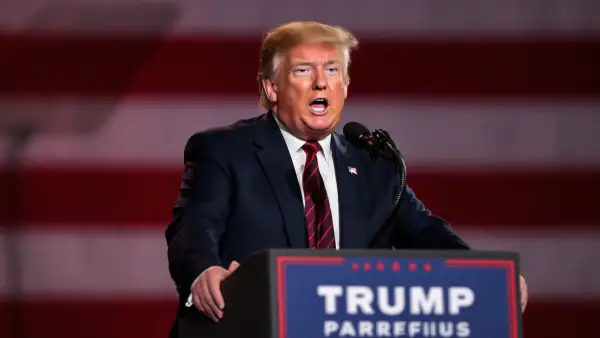
Tariffs in the U.S. remain at multi-decade highs despite rollbacks, impacting consumer prices across sectors. President Donald Trump launched an economic tour defending his tariff policies, claiming they generated "hundreds of billions of dollars" in revenue while urging Americans to accept higher prices on certain products. This defense surfaced amid rising affordability concerns ahead of the 2026 midterms.
But the real story isn’t just about tariffs as taxes. It’s about how targeted tariff adjustments create a lever that shifts economic trade-offs, forcing consumers and businesses to reorganize spending and supply chains. Trump’s pencil example—arguing children don’t need 37 pencils when 1 or 2 suffice—exposes a strategic constraint repositioning rather than mere price hikes.
"Affordability concerns mask a deeper system-level play," says the emerging analysis. Tariffs don’t just raise costs; they rewrite consumer priorities and supplier dynamics—unlocking new leverage points in trade.
Why Conventional Critiques Miss The Point
Most critics treat tariffs as blunt tax tools that simply inflate prices and dampen growth. This misses the subtle leverage mechanism that targeted tariff deployment creates constraints forcing adaptations. For instance, rolling back tariffs on food products while maintaining others pushes consumers to curtail discretionary imports, reshaping demand curves.
This is akin to what we observed in tech layoffs, where underused systems signal structural leverage failures rather than straightforward cost-cutting (source). Similarly, tariffs strategically recalibrate economic pressures rather than uniform price hikes.
How Tariffs Shift Supply Chain and Consumer Decision Systems
The baseline 10% tariff on imports from China and exclusions under the USMCA reshape cross-border trade flows practically overnight. Companies sourcing materials or products face dual incentives: absorb the cost or innovate supply chains. Unlike competitors keeping static global sourcing, U.S. firms now must optimize around tariff constraints or lose margin.
Comparatively, other major economies lean on broadly stable trade agreements that avoid sudden, public tariff fluctuations, focusing on long-term supply partnerships. The U.S. system forces recurring supply chain stress tests, accelerating supplier diversification and cost innovation.
This dynamic parallels how Walmart quietly handed leadership to unlock growth phases by redesigning operational levers (source), not by simple price or headcount changes.
What The Partial Pass-Through of Tariffs Means for Market Leverage
Federally backed research shows tariff effects on price pass-through remain partial—businesses delay or absorb some costs due to competitive pressure or expectations the tariffs are temporary. This partial pass-through signals dual leverage in play: consumer price sensitivity and supplier margin management.
This is a critical system lever, enabling operators to influence market prices without destabilizing consumer demand completely. Similar to how OpenAI scaled ChatGPT to 1 billion users by balancing infrastructure and user experience constraints (source), tariffs impose constraints that gradually shape economic behavior.
The Forward Leverage Play In Trump’s Tariff Approach
The key constraint shift is how tariffs force businesses and consumers into new efficiency frontiers—prioritizing essential goods, innovating sourcing, and recalibrating pricing strategies. This is leverage beyond taxation: it’s structural behavior change embedded in trade policy.
Operators and policymakers watching this should note the strategic advantage lies in the tariff policy’s ability to create ongoing, system-level pressure that compounds over time instead of one-off shocks. The U.S. move creates a leverage framework competitors must navigate or cede ground.
Other economies analyzing U.S. tariff outcomes could adapt lessons on constraint-based policy levers to reshape their own trade positioning. "Tariffs aren’t just price walls; they're economic chess moves controlling long-term leverage."
Related Tools & Resources
Understanding the intricacies of supply chain optimization is crucial for navigating the challenges brought about by tariffs. Platforms like MrPeasy provide manufacturers with the tools to manage production planning and inventory control efficiently, allowing businesses to adapt swiftly to changing economic dynamics. Learn more about MrPeasy →
Full Transparency: Some links in this article are affiliate partnerships. If you find value in the tools we recommend and decide to try them, we may earn a commission at no extra cost to you. We only recommend tools that align with the strategic thinking we share here. Think of it as supporting independent business analysis while discovering leverage in your own operations.
Frequently Asked Questions
What is the main economic impact of Trump’s tariff policies?
Trump’s tariff policies have generated "hundreds of billions of dollars" in revenue, creating economic leverage that forces consumers and businesses to reorganize spending and supply chains beyond just raising prices.
How do tariffs shift consumer behavior according to the article?
Tariffs prompt consumers to prioritize essential goods and reduce discretionary imports, forcing adaptations in spending that reshape demand curves rather than acting as simple taxes.
What example did Trump use to explain his tariff strategy?
Trump used the example of pencils, arguing children don’t need 37 pencils when 1 or 2 suffice, highlighting how tariffs create strategic constraints that reposition economic behavior.
How do U.S. tariffs affect supply chains for companies?
The baseline 10% tariff on imports from China incentivizes U.S. companies to absorb costs or innovate supply chains by optimizing around tariff constraints or face margin losses.
Why do some critics misunderstand the effect of tariffs?
Many critics see tariffs as blunt tax tools raising prices, missing the subtle leverage mechanism that forces adaptations and structural changes in spending and sourcing decisions.
What does partial pass-through of tariffs mean?
Partial pass-through means businesses absorb or delay tariff costs due to competitive pressures, signaling dual leverage over consumer prices and supplier margins.
How does the U.S. tariff system compare to other economies?
Unlike other economies with stable trade agreements, the U.S. applies recurring tariff adjustments, causing ongoing supply chain stress tests that accelerate innovation and diversification.
What is the long-term strategic effect of Trump’s tariff approach?
Trump’s tariff approach creates ongoing system-level pressures shifting firms and consumers into new efficiency frontiers, enabling the U.S. to gain economic leverage in global trade positioning.