
Why Ukraine’s River Drone Shift Signals New Warfare Leverage

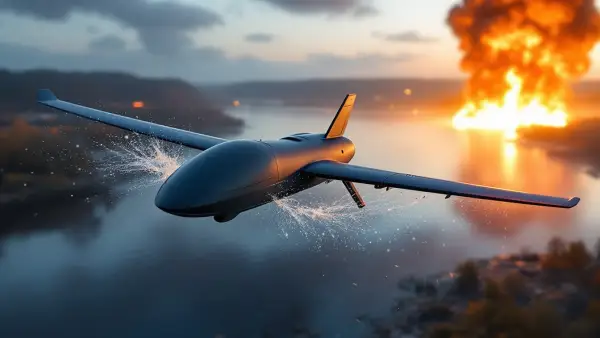
Naval drone warfare typically conjures images of open ocean clashes involving expensive warships. Ukraine is rewriting this script by deploying modular Barracuda river drones on inland waterways like the Dnipro River as of late 2025. This geographic pivot isn’t just tactical—it reveals a deep shift in how low-cost autonomous systems exploit environmental constraints to multiply impact. “Leverage comes from weaponizing neglected terrain and systems that operate autonomously in tight spaces,” says a NATO defense analyst.
Common Wisdom Misreads Drone Warfare as Open-Water Cost Cutting
Conventional analysis sees drone use as a blunt cost-saving measure replacing expensive ships. That view misses the real leverage: constraint repositioning. Most naval drones, including Sea Baby or Magura types, target large, open water zones where Russian Black Sea Fleet vessels operate. The challenge has been the channeling effect of confined waterways, which traditionally limited unmanned vessel utility. Ukraine’s river drone innovation flips disadvantages into force multipliers.
The move challenges equations behind costly asset deployment and situational control. This mirrors broader automation theses in defense tech: it’s not just about cheaper units but about exploiting niches that require less direct human control. For more on system constraints shaping strategic moves, see How Ukraine Sparked A 10b Drone Surge In Military Production.
Modularity and AI Turn Small Rivers Into Autonomous Kill Zones
The 40th Separate Coastal Defense Brigade unveiled the Barracuda in September 2025 as a modular drone platform. Its ability to swap payloads from naval mines to machine guns and grenade launchers leverages adaptability in narrow, brown-water channels. Unlike traditional naval craft that require large crews and support, Barracuda’s AI-driven autonomy allows persistent, remote strikes in constrained environments.
By successfully sinking Russian logistical boats and destroying riverside bases, these drones engage enemy supply lines where control was previously uncontested. This stratagem contrasts with Russia’s Kremlin-dominated naval doctrine, which relied on repositioning warships in vast seas. It echoes how OpenAI’s scaling of ChatGPT relies on modular AI components over single monolithic systems (How OpenAI Actually Scaled ChatGPT To 1 Billion Users).
Cheap, Domestic Production Amplifies Asymmetric Power
Ukraine’s lack of a traditional navy didn’t limit its maritime reach. Instead, it leveraged domestic drone manufacturing focused on automation and affordability. The defense minister expects nearly 3 million FPV drones by year-end 2025, many made in-country. This undercuts Russia’s heavy investments in Black Sea Fleet vessels and forces redistribution of expensive assets—a clear leverage cycle where low-cost, high-volume tech depletes expensive enemy resources remotely.
This contrasts sharply with competitors who invest heavily in fewer manned ships, resulting in inflexible force posture. It parallels trends seen in tech firms optimizing lean, modular production over large fixed capital, detailed in Why 2024 Tech Layoffs Actually Reveal Structural Leverage Failures.
New Constraint: Inland Waterways as Uncrewed Combat Zones
The key constraint shift is turning narrow inland and brown-water environments into battlegrounds for autonomous systems. This space was previously off-limits or low priority for naval conflict due to operational limits on traditional vessels. By activating these zones with AI-driven river drones, Ukraine expands its strategic depth while forcing adversaries to stretch defenses thin.
Defense planners worldwide must watch Ukraine’s river drone model—both for lessons in modular AI integration and for how geographic constraints are being recast as force multipliers. Nations sharing similar waterways like the Baltic states and Southeast Asia could replicate this asymmetric tactic.
“Warfare leverage increasingly comes from exploiting overlooked spaces with purpose-built autonomous systems,” concludes a NATO general. The future of maritime conflict will be decided not just at sea, but deep within rivers and canals.
Related Tools & Resources
As warfare evolves with the innovative use of AI-driven systems like Ukraine's river drones, it's crucial for developers to harness similar advancements in their domains. Tools like Blackbox AI provide essential support in coding and development, enabling tech professionals to create adaptive and efficient solutions reflective of the rapidly changing landscape of automation and strategic technology. Learn more about Blackbox AI →
Full Transparency: Some links in this article are affiliate partnerships. If you find value in the tools we recommend and decide to try them, we may earn a commission at no extra cost to you. We only recommend tools that align with the strategic thinking we share here. Think of it as supporting independent business analysis while discovering leverage in your own operations.
Frequently Asked Questions
What is Ukraine's new approach to river drone warfare?
Ukraine has pioneered the use of modular Barracuda river drones on inland waterways like the Dnipro River since late 2025, exploiting narrow, constrained environments to multiply military impact autonomously.
How many drones does Ukraine expect to produce by the end of 2025?
The Ukrainian defense minister projects nearly 3 million FPV drones produced domestically by the end of 2025, significantly amplifying its asymmetric maritime power.
What makes the Barracuda drones innovative compared to traditional naval vessels?
Barracuda drones feature modular payloads (naval mines, machine guns, grenade launchers) and AI-driven autonomy, enabling persistent remote strikes in tight inland waterways where conventional vessels are limited.
Why is the shift to river drones strategically important?
Operating in constrained inland waterways turns neglected terrains into autonomous kill zones, expanding Ukraine's strategic depth and forcing adversaries to spread their defense resources thinner.
How does Ukraine’s river drone strategy affect Russian naval operations?
By sinking Russian logistical boats and destroying riverside bases, Ukraine’s drones undermine Russia’s Black Sea Fleet logistics and force costly asset redeployment in contested waters.
What broader military trend does Ukraine's drone use illustrate?
The strategy exemplifies defense automation leveraging low-cost, high-volume modular systems exploiting geographic and operational constraints rather than relying on expensive manned platforms.
Which countries might adopt tactics similar to Ukraine's river drone warfare?
Nations with similar inland waterways such as Baltic states and Southeast Asian countries could replicate Ukraine’s model to gain asymmetric warfare advantages in constrained aquatic environments.
How does Ukraine's drone production contrast with traditional military investments?
Ukraine emphasizes cheap, domestic, high-volume drone manufacturing, contrasting with competitors investing heavily in fewer costly manned ships, yielding greater tactical flexibility and force multiplicative effects.