
Why US Lawmakers Forcing Vote on War Powers Changes Executive Leverage

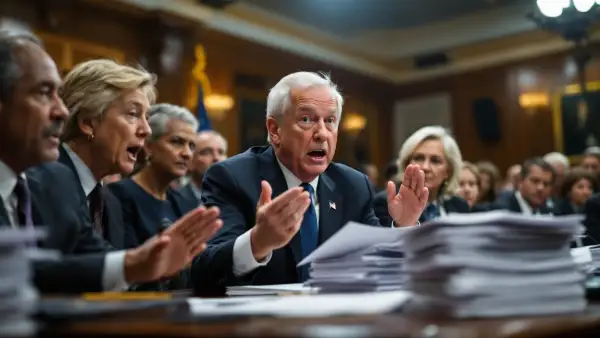
US lawmakers are positioning to force a congressional vote if former President Donald Trump initiates military action against Venezuela. This move directly challenges the conventional executive flexibility on war powers by reasserting legislative control over conflict decisions. But the real leverage shift lies in curbing unilateral military actions through system-level checks embedded in political processes. Political power that checks itself prevents costly conflicts and unintended escalation.
Why Executive War Powers Are Misunderstood Constraints
The prevailing view assumes presidents inherently hold near-absolute authority once in office to engage militarily. This belief misses that legal and political mechanisms systematically constrain or enable this power. The new effort by US lawmakers to enforce a vote creates a formal procedural blocker rather than relying on voluntary restraint.
This recasts war powers from a flexible tool to a gated process, which fundamentally alters incentives for rapid military engagement. Unlike prior ad hoc congressional pressure, this creates a near-automatic leverage point for oversight, reducing executive decision friction but increasing institutional friction.
Similar sovereignty leverage dynamics appear in international economic sanctions, where governments use legal frameworks as constraint repositioning, forcing adversaries into harder choices. See how Senegal's debt downgrade exposed system fragility as parallel geopolitical leverage.
The Procedure as a Strategic Constraint Tool
The planned legislative move targets rewriting the implicit unwritten rules that allow a president to act without express congressional approval on conflicts like Venezuela. By institutionalizing a forced vote, Congress changes the constraint from discretionary opposition to an operational gatekeeper embedded in law.
This system design introduces compounding advantages: preventing unauthorized military escalation reduces risks of prolonged conflicts that drain resources. It also repositions the critical leverage point from battlefield decisions back into formal legislative processes, simplifying political cost calculations.
Unlike predecessors who relied on post-hoc political pressure or public opinion, this move automates congressional check leverage, making military initiation processes conditional. This contrasts with historical unilateral acts often bypassing Congress entirely.
A strategic comparison is how OpenAI scaled ChatGPT by embedding feedback systems that automate control rather than depending on manual moderation. Here, legislative automation of war powers similarly enforces systemic oversight.
Forward-Looking Implications for US Foreign Policy Leverage
The key constraint flipped is decision authority from executive flexibility toward structured congressional oversight. This forces future administrations to factor in explicit political buy-in before military actions against Venezuela or similar hotspots.
Policy operators and strategists should watch this as a model for embedding leverage through procedural constraints in other sensitive domains, such as trade embargoes or election security. Countries with similar divided government systems can replicate this for balance-of-power leverage.
In a world where rapid military moves often heighten geopolitical risk, embedding systemic checks is a proactive structural advantage. Real leverage is gained by designing political systems that automate restraint and force explicit accountability.
Learn how other governance and economic leverage systems reveal hidden constraints in our analysis of US equities resilience and operational process documentation.
Related Tools & Resources
The strategic framework discussed in the article underscores the importance of precise accountability in decision-making processes. This is why platforms like Hyros have become essential for businesses aiming to optimize their ad tracking and attribution. By leveraging such tools, organizations can ensure that their marketing efforts align with the structured oversight that is so critical today. Learn more about Hyros →
Full Transparency: Some links in this article are affiliate partnerships. If you find value in the tools we recommend and decide to try them, we may earn a commission at no extra cost to you. We only recommend tools that align with the strategic thinking we share here. Think of it as supporting independent business analysis while discovering leverage in your own operations.
Frequently Asked Questions
What recent action have US lawmakers taken regarding presidential war powers?
US lawmakers are positioning to force a congressional vote if a president initiates military action against Venezuela. This formalizes legislative oversight, reducing unilateral executive military actions.
How does the forced vote change presidential authority on war powers?
The forced vote transforms war powers from a flexible executive tool to a gated legal process, increasing institutional friction and requiring explicit congressional approval before military engagement.
Why is limiting unilateral military actions important?
Limiting unilateral military actions helps prevent costly conflicts and unintended escalation by embedding systemic political checks and balances within the decision-making process.
How do these changes compare to previous congressional oversight efforts?
Unlike earlier ad hoc political pressures, this move institutionalizes an automatic congressional check, shifting leverage from discretionary opposition to a mandatory procedural barrier.
What other domains could benefit from similar procedural constraints?
Other sensitive areas like trade embargoes and election security could use similar structured oversight mechanisms to embed leverage and accountability within political systems.
How might this impact future US foreign policy decisions?
Future administrations will need explicit political buy-in before military actions against Venezuela or similar hotspots, increasing formal legislative influence over foreign policy decisions.
Are there examples of similar leverage strategies outside war powers?
Yes, international economic sanctions and automated control systems like those used by OpenAI for ChatGPT illustrate embedding legal or procedural constraints to enforce systemic oversight and balance.
What is the significance of the links to tools like Hyros in this context?
Tools like Hyros exemplify the importance of precise accountability and structured oversight in decision-making processes, aligning marketing efforts with the systemic checks discussed in political leverage.