
Why Warner Bros. Discovery’s Cable Spin-Off Signals Media’s Leverage Shift

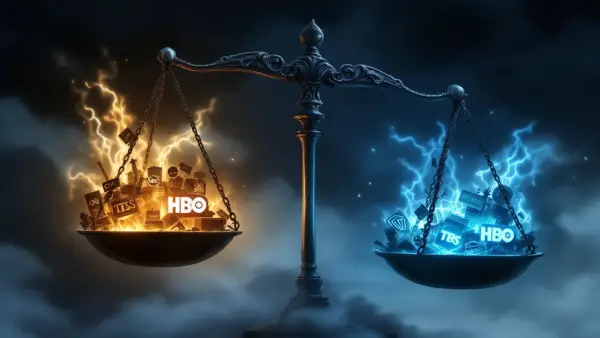
Paramount CEO David Ellison claims Warner Bros. Discovery's cable networks, including CNN, are worth just $2.5 billion, a fraction of independent estimates near $10 billion.
The battle between Paramount and Netflix over WBD’s HBO and studio assets hinges on how investors value this cable spin-off.
This valuation tug-of-war isn’t just about price—it reveals a deep shift in media leverage, where legacy cable bundles decay into low-value fragments.
“Legacy media brands barely register in a world run by giant software companies.”
Why valuing cable networks as worthless is a strategic repositioning
The conventional narrative treats cable networks like CNN, TNT, and Turner channels as cash cows, despite subscriber losses. Ellison’s $2.5 billion figure is dismissed as absurdly low.
But this ignores the core leverage constraint: these networks cannot operate in isolation—they depend on cable bundles locked into outdated distribution systems.
This is constraint repositioning—a system-level shift where the value shifts from controlling linear TV networks to controlling streaming platforms like Netflix and HBO Max.
This dynamic resembles how OpenAI scaled ChatGPT: leverage flows to platforms owning infrastructure and direct consumer access, not legacy intermediaries.
How the spin-off structure changes shareholder incentives
Netflix’sWBD’sHBO and the studio outright.
This two-step move forces investors to overvalue cable networks to justify the deal’s total price. Ellison’s bid, by contrast, hinges on minimizing spin-off value, boosting the relative value of HBO content assets.
This split creates an interesting system-level trade-off: shareholders must choose between a lump sum for legacy networks with declining leverage or concentrated ownership of future-facing streaming studios.
Equity markets often underestimate the impact of changing constraints on asset values.
Why legacy media brands are now “garage sale leftovers”
Bloomberg Intelligence valued CNN at $5 billion in 2023; a forensic accountant recently pegged it at $2.3 billion. Ellison’s figure of $2.5 billion for the entire cable portfolio confirms a steep decline.
Compared to digital giants like Google, which dwarfs this with market caps 100x larger, these networks are relics in the software era.
The real leverage now lies in owning streaming distribution infrastructure, proprietary content libraries like HBO, and direct-to-consumer relationships—none of which depend on cable carriage fees or bundle control.
This unfolds like structural leverage failures in tech layoffs, where old system constraints collapse, forcing strategic pivots.
What operators should watch next
The constraint shift from cable networks to streaming studios forces media owners to rethink system design.
Buyers and investors must focus on assets that compound value without legacy distribution drag. The industry’s largest lever is owning direct consumer relationships and scalable content platforms, not fragmented cable nets.
The Warner Bros. spin-off fight reveals a vital truth: legacy bundle control no longer drives leverage—the new game is platform ownership and automation.
“Legacy brands’ fame doesn’t create leverage—control of distribution and user engagement does.”
Media operators must pivot sharply or watch value erode as streaming giants continue to rewrite the rules.
Related Tools & Resources
In a rapidly shifting media landscape, maintaining direct consumer connections is more critical than ever. This is why tools like Brevo have become essential for businesses looking to enhance their customer outreach through email and SMS marketing, allowing for deeper engagement that aligns with the evolving dynamics of media ownership. Learn more about Brevo →
Full Transparency: Some links in this article are affiliate partnerships. If you find value in the tools we recommend and decide to try them, we may earn a commission at no extra cost to you. We only recommend tools that align with the strategic thinking we share here. Think of it as supporting independent business analysis while discovering leverage in your own operations.
Frequently Asked Questions
Why does Paramount CEO David Ellison value Warner Bros. Discovery's cable networks at $2.5 billion?
David Ellison claims the entire cable portfolio of Warner Bros. Discovery, including CNN, is worth just $2.5 billion, significantly lower than independent estimates near $10 billion. This reflects the declining leverage of legacy cable networks dependent on outdated distribution systems.
What is the significance of the cable spin-off by Warner Bros. Discovery?
The cable spin-off separates Warner Bros. Discovery's cable networks from its streaming and studio assets like HBO. This restructuring affects shareholder incentives by forcing a valuation trade-off between declining legacy cable networks and future-focused streaming platforms.
How is media leverage shifting from cable networks to streaming platforms?
The value in media is moving from controlling linear TV networks bundled in cable packages to owning streaming platforms that have direct access to consumers and scalable content infrastructure, such as Netflix and HBO Max.
Why are legacy media brands like CNN considered "garage sale leftovers"?
Legacy brands are losing value because they rely on cable carriage fees in a world increasingly dominated by software companies and direct-to-consumer platforms. For example, Bloomberg Intelligence valued CNN at $5 billion in 2023, while a forensic accountant recently estimated $2.3 billion, highlighting the steep decline.
What impact does the spin-off structure have on investors?
The spin-off forces investors to either overvalue legacy cable networks to justify the deal or focus on the growing value of streaming studios and content assets. It creates a strategic choice between declining legacy assets and future-facing platforms.
How do streaming platforms affect the value of traditional cable networks?
Streaming platforms own the distribution infrastructure and have direct consumer relationships, which command greater leverage and valuation. Cable networks, conversely, are seen as low-value fragments since they depend on outdated bundle systems.
What should media operators focus on in this new landscape?
Operators should prioritize owning direct consumer relationships and scalable streaming content platforms rather than fragmented cable networks. This pivot is necessary to maintain and grow asset value as streaming giants rewrite industry rules.
How does this media shift compare to leverage failures in tech layoffs?
Similar to structural leverage failures seen in tech layoffs, where old system constraints collapse, the media industry is experiencing a shift where legacy cable network constraints are giving way to platform ownership and automation as the new source of leverage.